



How AI and Machine Learning Are Making Digital Twins More Intelligent
How AI and Machine Learning Are Making Digital Twins More Intelligent

- Last Updated: September 23, 2026
Mehul Rajput
- Last Updated: September 23, 2026
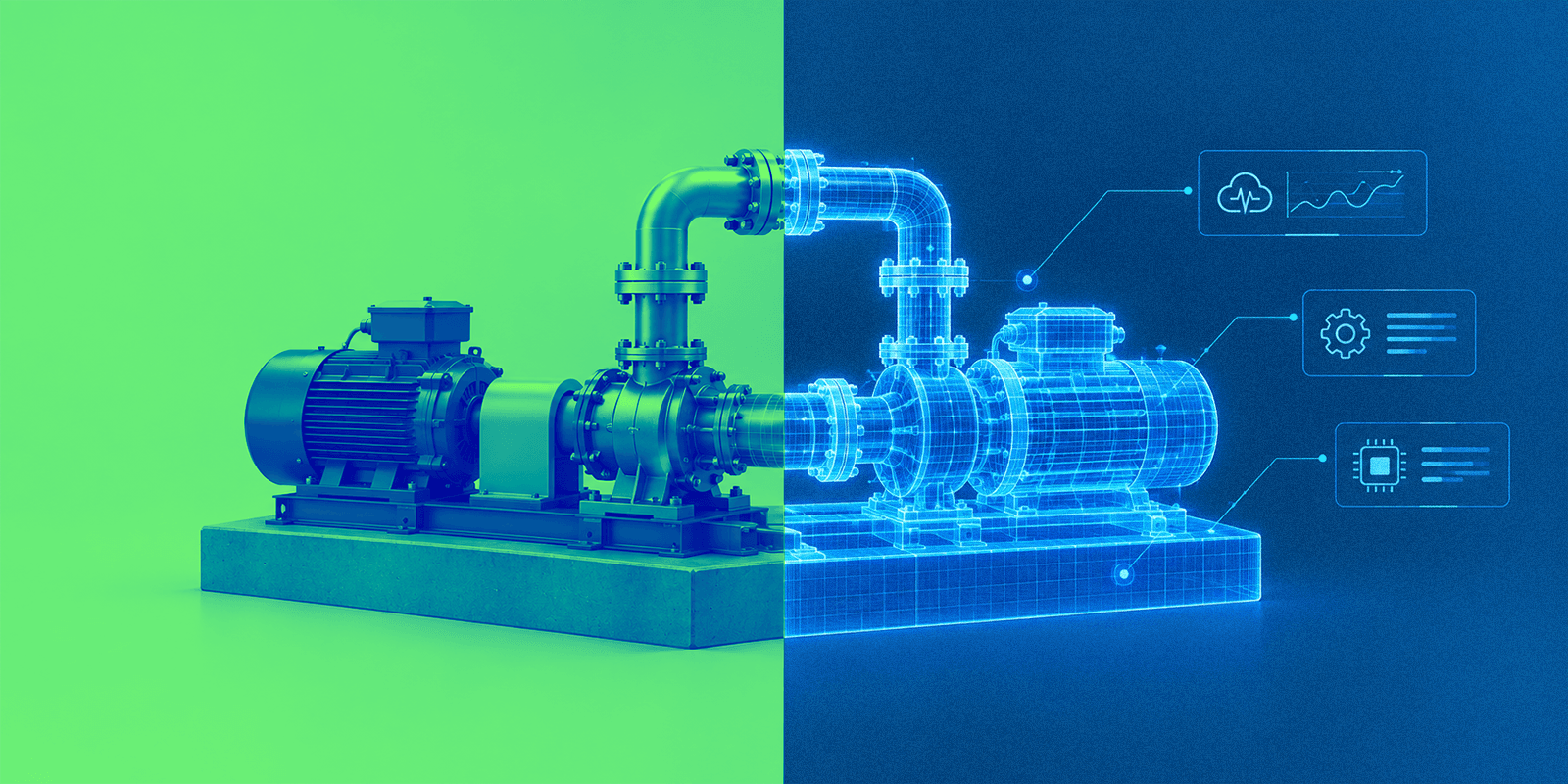
A digital twin used to mean a detailed 3D replica that updated slowly and told you what had already happened. That definition no longer holds. From 2025 into 2026, digital twins have shifted from passive visualization tools to systems that predict, reason, and, in some cases, act on behalf of the physical assets they represent.
The change didn't come from better graphics or faster sensors alone. It came from embedding artificial intelligence and machine learning directly into how a twin interprets data and makes decisions.
I've spent years building AI and digital twin systems for enterprise clients as CEO of MindInventory, and I've watched this shift happen in real deployments, not just in research papers. The gap between a twin that visualizes and a twin that decides is almost entirely a function of the AI layered on top of it. This article breaks down how that layer actually works, where it delivers value today, and what enterprises need to plan for before adopting it.
From Static Replicas to Cognitive Systems
The first generation of digital twins was built on physics-based modeling. Engineers created virtual representations of machines, buildings, or processes using CAD data and known physical laws, then fed them live sensor data to keep the model synchronized with reality. This approach is accurate for well-understood systems, but it has a ceiling.
Physics models can only simulate what they've been explicitly programmed to understand. They don't learn from anomalies, and they struggle with the messy, nonlinear behavior that shows up in real-world operations.
Machine learning changes this by letting the twin learn directly from operational data instead of relying solely on predefined equations. Rather than replacing physics models, the most effective digital twins now combine both: physics provides the structural boundaries of what's possible, while ML models continuously calibrate predictions based on what's actually happening on the shop floor, in the pipeline, or on the road.
This hybrid approach is becoming the practical standard because pure physics models are too rigid for dynamic environments, and pure data-driven models can behave unpredictably outside the range of data they were trained on.
The result is a twin that doesn't just mirror an asset's current state. It develops a working understanding of how that asset behaves over time, under stress, and in edge cases that weren't part of the original design specification.
The Core AI/ML Layers Powering Modern Digital Twins
Most AI-driven digital twins are built from a handful of overlapping capabilities, not a single algorithm. Understanding these layers separately clarifies where value is actually created.
Predictive analytics and anomaly detection form the foundation. Supervised and unsupervised learning models are trained on historical sensor data to recognize normal operating patterns, then flag deviations before they become failures.
This is the most mature application of machine learning in digital twins and the one with the clearest return on investment, since it directly reduces unplanned downtime and inspection costs.
Reinforcement learning adds a layer of autonomous optimization. Instead of just predicting an outcome, reinforcement learning agents can test thousands of virtual adjustments inside the twin, such as changing a production line's sequencing or a building's HVAC setpoints, and learn which combination produces the best result before applying it in the physical world. This is where digital twins move from monitoring to active decision support.
Generative AI is the newest addition, and it's expanding what twins can simulate. Rather than only replaying historical scenarios, generative models can construct plausible future states, such as how a component might degrade under new load conditions, or generate synthetic training data for rare failure modes that don't appear often enough in real datasets to train a model properly.
Computer vision and sensor fusion let twins interpret unstructured inputs like camera feeds, thermal imaging, and LiDAR alongside structured sensor readings, which matters most in applications like quality inspection and autonomous vehicle testing.
Natural language interfaces, built on large language models, are increasingly used to let engineers and operators query a twin in plain language, such as asking why a particular asset's efficiency dropped last week, instead of navigating dashboards manually.
None of these layers work in isolation. A mature digital twin typically runs several of them concurrently, feeding outputs from one model into the inputs of another.
How Data Actually Flows Through an AI-Enabled Twin
It helps to walk through the architecture rather than treat this as an abstract concept. A typical AI-driven digital twin pipeline looks like this:
Sensors and IoT devices on the physical asset collect continuous telemetry, covering variables like temperature, vibration, pressure, throughput, or location depending on the use case. This raw data moves through edge gateways, where basic filtering and preprocessing happen close to the source to reduce bandwidth load and latency, which matters when a twin needs to support near real-time control loops.
Cleaned data then flows into a central ingestion layer, often built on time-series databases or streaming platforms, where it synchronizes with the twin's virtual model. This is the point where the physics-based simulation and the ML models interact: the simulation provides the expected baseline, and the ML layer compares live data against that baseline to detect drift or anomalies.
Trained models, whether for prediction, optimization, or generative simulation, sit in an inference layer that continuously scores incoming data and updates the twin's state. Outputs feed back into dashboards for human operators, into automated control systems for closed-loop actions, or into planning tools for scenario testing.
The part organizations underestimate is the MLOps layer underneath all of this. Models degrade as physical assets age, operating conditions shift, or new equipment is added to a facility. Without a retraining and monitoring pipeline built into the twin's architecture from the start, model accuracy erodes quietly until predictions become unreliable.
Getting this data and model infrastructure right is typically a bigger undertaking than building the initial simulation, and it's often why early digital twin pilots either scale successfully or stall after the first year.
Where AI-Driven Twins Are Proving Value Across Industries
In manufacturing, digital twins for predictive maintenance are widely used alongside process optimization, helping detect bearing wear and thermal anomalies days before failure while adjusting production line parameters to reduce scrap rates.
In automotive and aerospace, twins simulate component fatigue across thousands of virtual test cycles, cutting down the number of physical prototypes needed before a design is validated.
Healthcare has moved more cautiously but meaningfully, using patient-specific and device-level twins to model how a medical device will perform under individual physiological conditions before deployment, or to simulate hospital operations and equipment utilization.
Energy is one of the sectors seeing the fastest AI-driven twin adoption right now, largely because grid operators need to balance increasingly variable renewable input with real-time demand.
AI models layered onto grid twins can forecast load fluctuations and simulate failure scenarios across substations and transmission infrastructure, which becomes especially valuable as utilities integrate more distributed and intermittent power sources. A closer look at how digital twins in energy are being deployed shows how directly this pairs with predictive grid management.
Logistics and supply chain operations use twins to simulate warehouse layouts and routing decisions under disruption scenarios, while smart buildings apply similar principles to occupancy-based energy optimization.
Aviation has adopted engine-level twins that combine physics-based degradation models with machine learning to extend maintenance intervals safely rather than relying on fixed schedules.
Implementation Challenges Enterprises Should Plan For
The technical promise of AI-driven twins is well ahead of how easy they are to deploy in practice. A few recurring obstacles show up across most implementations.
Data quality and completeness are usually the first blocker. Machine learning models are only as good as the historical operational data feeding them, and many industrial environments have inconsistent sensor coverage or years of unlabeled data that needs cleanup before any model can be trained reliably.
Integration with legacy operational technology remains difficult, since many industrial systems weren't built with modern data connectivity in mind and require middleware or retrofitting to expose usable data streams.
Model drift is an ongoing operational cost, not a one-time engineering problem. Organizations that don't budget for continuous retraining tend to see twin accuracy decline within months of going live.
Talent and cross-disciplinary expertise are harder to source than the technology itself, since building these systems requires people who understand both the physical domain and applied machine learning, which is a narrower skill set than general software development.
Compute and edge infrastructure costs scale faster than expected once organizations move from a single pilot twin to fleet-wide or facility-wide deployment, particularly when real-time inference is required at the edge rather than in the cloud.
None of these are reasons to avoid the technology, but they explain why so many digital twin initiatives stall between pilot and production.
Building an AI-Ready Digital Twin Strategy
Enterprises that succeed with AI-driven twins generally follow a similar sequence rather than trying to build an all-encompassing system from day one. They start with a single, well-bounded use case, such as predictive maintenance on one production line, rather than attempting a facility-wide twin immediately. This keeps data requirements manageable and lets teams validate model accuracy before scaling.
They also invest early in data infrastructure, since retrofitting sensor coverage and historical data pipelines after a twin is already in development is far more expensive than planning for it upfront. A practical digital twin strategy treats the rollout as an incremental capability build rather than a single deployment milestone, expanding scope only once the initial use case demonstrates measurable value.
Cross-functional ownership matters more than most organizations expect. Digital twins that succeed tend to have shared accountability between operations teams, who understand the physical process, and data science teams, who understand the models, rather than being owned entirely by IT.
Finally, organizations that plan for the full lifecycle, including model retraining, sensor maintenance, and periodic architecture review, avoid the common failure pattern where a twin performs well for the first few months and then quietly loses accuracy as conditions change.
Where This Is Headed
The next phase of this technology is agentic. Rather than twins that predict and recommend, we're beginning to see twins that can take bounded autonomous actions, adjusting a process parameter or triggering a maintenance workflow without waiting for human approval, within limits set by engineers.
Generative AI is also expanding from scenario simulation to twin co-design, where models help generate and test design variations before a physical prototype exists.
We're also seeing early movement toward twin-of-twins architectures, where individual asset twins feed into higher-level system twins, such as a single machine's twin feeding into a factory-wide twin, which in turn feeds into a supply chain twin.
This layered approach is still immature, but it points toward digital twins functioning less like isolated simulation tools and more like a connected decision-making layer across an entire operation.
The organizations getting the most value from digital twins right now aren't the ones with the most sophisticated 3D visualizations. They're the ones that treated the AI and data layer as the actual product from the start, and built the visualization as a way to see what that intelligence produces, not the other way around.

The Most Comprehensive IoT Newsletter for Enterprises
Showcasing the highest-quality content, resources, news, and insights from the world of the Internet of Things. Subscribe to remain informed and up-to-date.

New Podcast Episode

The Future of AI-Powered Public Safety

Related Articles

Related Solutions
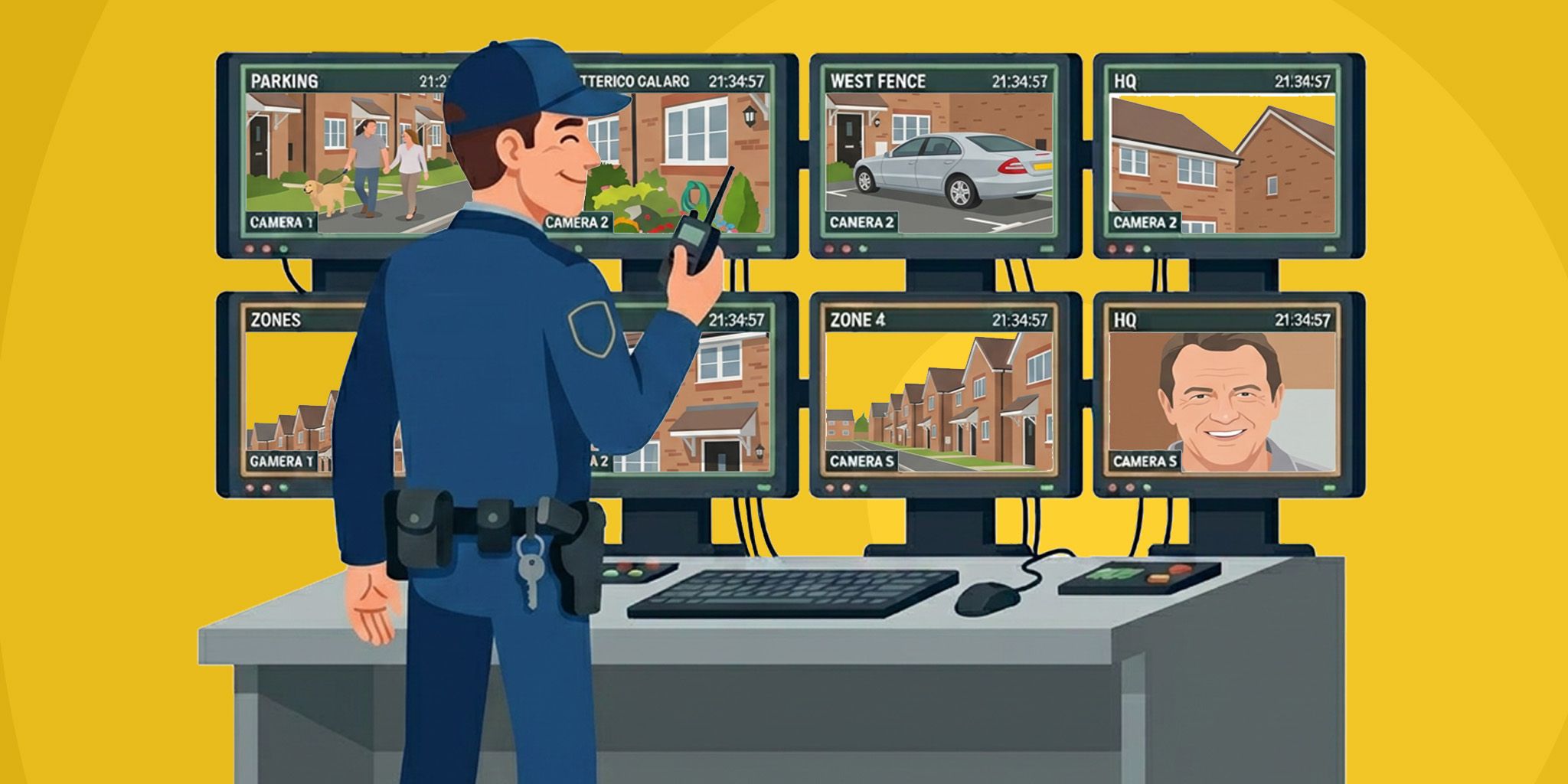
Smart Community Management for HOAs
AI-powered community monitoring with real-time visibility into entrances, parking, and shared spaces.
AI-powered community monitoring with real-time visibility into entrances, parking, and shared spaces.
Iveda
Iveda
Construction Site Safety Monitoring
AI-powered wearables for real-time PPE compliance monitoring, hazard detection, and incident documentation.
AI-powered wearables for real-time PPE compliance monitoring, hazard detection, and incident documentation.
Iveda
Iveda
Workers' Compensation Fraud Prevention
Quickly verify claims, reduce investigation time, and protect your bottom line with AI-powered video surveillance and analytics.
Quickly verify claims, reduce investigation time, and protect your bottom line with AI-powered video surveillance and analytics.
Iveda
Iveda

Related Solutions
Buildings & Facilities
Smart Community Management for HOAs
AI-powered community monitoring with real-time visibility into entrances, parking, and shared spaces.
Iveda
Construction
Construction Site Safety Monitoring
AI-powered wearables for real-time PPE compliance monitoring, hazard detection, and incident documentation.
Iveda
Construction
Workers' Compensation Fraud Prevention
Quickly verify claims, reduce investigation time, and protect your bottom line with AI-powered video surveillance and analytics.
Iveda