


How IoT and Digital Twins Are Redefining Asset Maintenance
How IoT and Digital Twins Are Redefining Asset Maintenance

- Last Updated: June 3, 2026
InnoMaint
- Last Updated: June 3, 2026
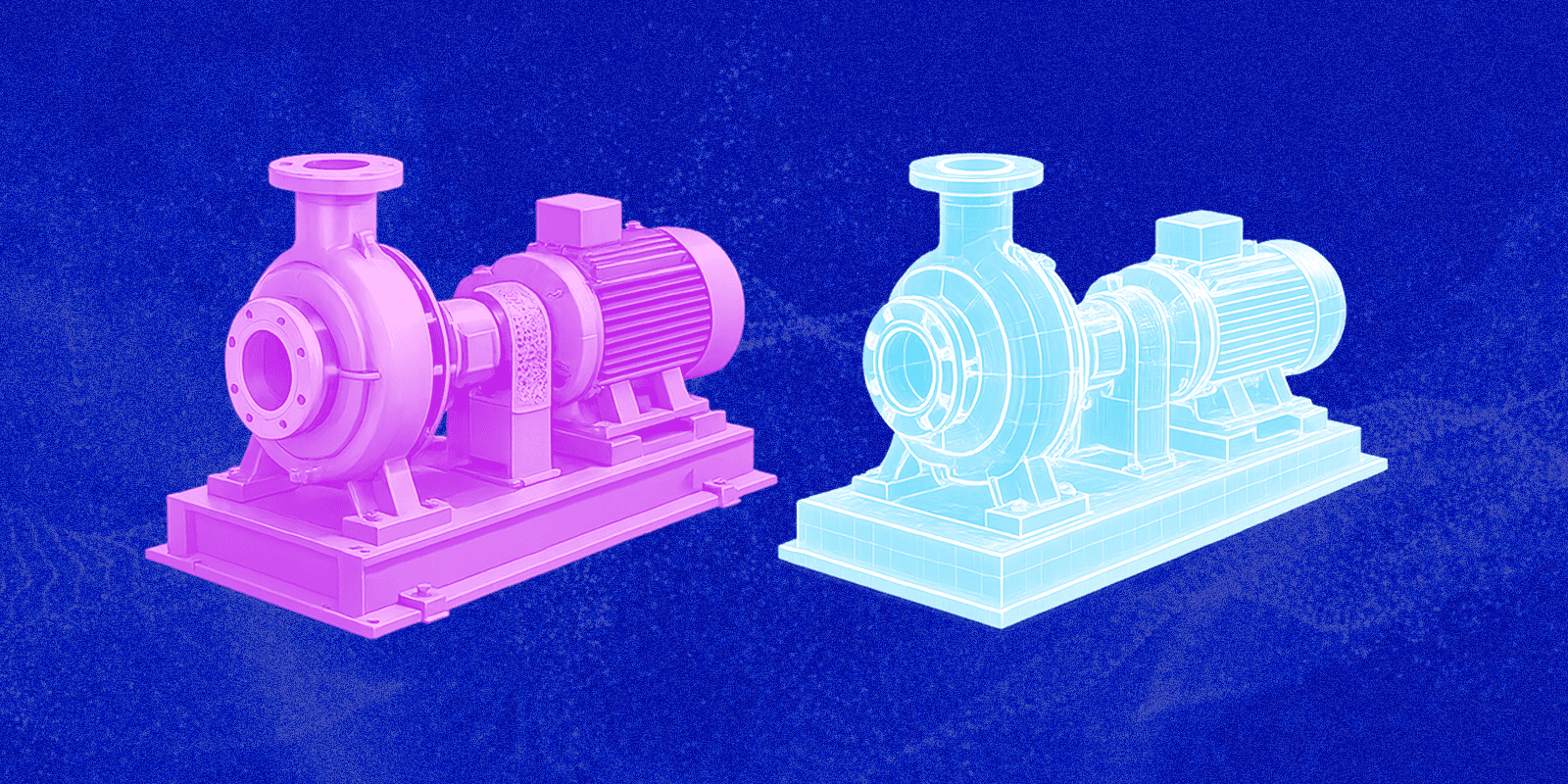
Imagine if your most critical equipment could talk to you. Not through cryptic error codes or late-night alarms, but through a constant, real-time conversation about its health, its stress levels, and exactly when it needs a tune-up. This isn’t a futuristic concept for aerospace engineers anymore. It is the reality of digital twin technology in the modern IoT era.
At its core, a digital twin is a virtual bridge between the physical and digital worlds. It is a dynamic replica that lives alongside your machines, learning from them and predicting their future. For maintenance teams, this represents a massive shift. Moving away from the days of fixing things after they break or following rigid, time-based schedules that might result in unnecessary work. Instead, entering an era of data-driven precision.
But how does it actually work in a maintenance setting? Let’s break it down.
Digital Twin Technology in Maintenance?
While a 3D CAD model is a snapshot of an asset’s design, a digital twin is a “living” model that evolves as the physical asset changes. It continuously ingests data from its physical counterpart to reflect its current state, making it an invaluable tool for Enterprise Asset Management Software.
This technology typically follows a hierarchy based on what is being replicated:
- Component twins: These focus on individual, critical parts within a machine, such as a motor, a bearing, or a valve. By monitoring a single component, you can identify subtle wear patterns before they affect the larger system.
- Asset twins: This is the most common type in maintenance. It represents a complete machine, such as a pump, a turbine, or a CNC lathe. It tracks how different components work together to provide a holistic view of the machine’s health.
- System twins: These models look at entire ecosystems, like a complex HVAC system in a hospital or an automated assembly line in an automotive plant. They help teams understand the interdependencies between different machines.
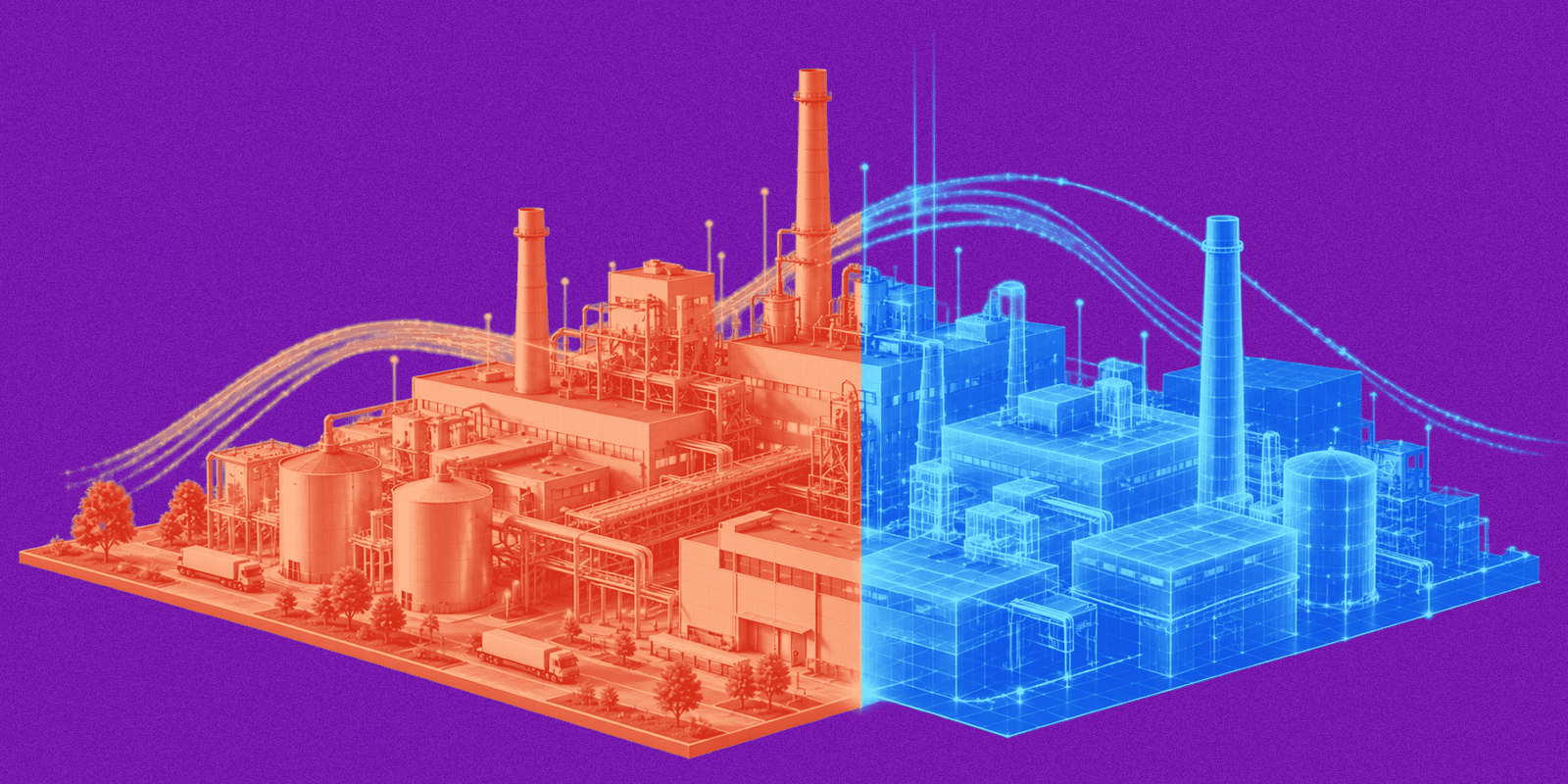
- Process twins: This is the highest level, representing full factory workflows or the entire operational logic of a smart building. These allow for “what-if” simulations to optimize production or energy use.
By integrating these virtual replicas into your daily workflows, you gain a level of visibility that was previously impossible. You aren’t just looking at an asset registry: you are looking at the pulse of your entire operation.
Synergy Between IoT and Digital Twins
The digital twin is only as good as the data that feeds it. This is where the Internet of Things (IoT) comes in. If the digital twin is the brain, then IoT sensors are the nervous system. These sensors are mounted directly on physical assets to track vital parameters such as vibration, temperature, acoustic emissions, and pressure.
This synergy creates what we call IT/OT convergence. For years, operational technology (OT) on the factory floor lived in a separate world from the information technology (IT) used for management. Digital twins break down these silos by connecting real-time sensor data directly to your management systems.
The data flow typically follows this path:
- Sensor collection: Sensors on the asset capture high-fidelity data.
- Edge processing: Initial analysis happens close to the source to filter out noise.
- Cloud synchronization: The refined data is sent to the cloud-based digital twin.
- Actionable insight: The model identifies an anomaly and triggers a response in your maintenance software.
Modern CMMS platforms are increasingly designed to simplify this integration between IoT devices and maintenance workflows. Believe that IoT integration for smart facilities shouldn’t be a complex science project. By unifying your sensors with CMMS, you can ensure that an alert from a vibrating motor immediately becomes a work order assigned to the right technician. You can explore more about these possibilities in the guide on smart building IoT solutions.
Key Benefits
Investing in digital twin technology isn’t just about having cool visualizations. It’s about the bottom line. The return on investment (ROI) comes from three primary areas: cost reduction, downtime prevention, and extended asset life.
Significant Cost Reduction
One of the most immediate benefits is the reduction in overall maintenance spending. Research from McKinsey suggests that companies using digital twins can slash maintenance costs by up to 40 percent. This happens because you are no longer performing “just in case” maintenance on healthy machines, and you are avoiding the exorbitant costs of emergency, after-hours repairs when a critical asset fails unexpectedly.
Prevention of Unplanned Downtime
Downtime is the enemy of productivity. In capital-intensive industries, an hour of lost production can cost thousands, or even millions, of dollars. By using predictive maintenance powered by digital twins, organizations can cut unplanned downtime by up to 45 percent. The model sees the failure coming days or weeks in advance, allowing you to schedule the repair during a planned shutdown.
Extended Asset Life
When you maintain an asset based on its actual condition rather than a generic schedule, you reduce the wear and tear associated with both neglect and over-maintenance. This precision can increase the lifespan of critical machinery by 20-40 percent. This is a core component of a modern strategy for asset lifecycle management, ensuring you get the maximum value out of every capital investment.
| Benefit Category | Impact Metric | Primary Driver |
|---|---|---|
| Maintenance Costs | 10-40% Reduction | Avoiding unnecessary tasks and emergency fees |
| Asset Availability | 5-10% Increase | Minimizing the duration of outages |
| Unplanned Downtime | Up to 45% Decrease | Predicting failures before they happen |
| Asset Lifespan | 20-40% Extension | Condition-based care and reduced wear |
Implementation challenges to anticipate
While the benefits are clear, the path to a fully functional digital twin environment has its hurdles. It’s not a “set it and forget it” solution. You need to be aware of a few key challenges before you dive in.
Data Quality & Management
The “garbage in, garbage out” rule applies here more than anywhere else. If your sensors aren’t calibrated correctly or if your data integration is patchy, your digital twin will give you false readings. Maintaining data integrity across thousands of sensors is a significant task that requires robust data governance.
Cybersecurity
Every new IoT sensor is a potential entry point for a cyber threat. When your physical assets are connected to the cloud, you must ensure that your data transmission is encrypted and that your systems have enterprise-grade security protocols. Protecting sensitive operational data is paramount in a connected maintenance environment.
Skills Gap
The role of the maintenance technician is changing. We are moving from a world of wrenches and oil to a world of data analysis and predictive modeling. Bridging this skill gap is essential. Your team needs to trust the digital twin’s recommendations and know how to interpret the insights it provides.
Pricing
Choosing a solution that supports digital twin technology requires an understanding of how these platforms are priced. Most modern CMMS and EAM providers use a tiered approach based on the complexity of the features you need and the number of assets you are managing.
It is important to look for a cost-effective pricing model that doesn’t penalize you for growing your IoT footprint. Some platforms charge per user, while others charge per asset or per data point.
Many enterprise solutions, such as IBM Maximo, use a credit-based licensing system like AppPoints. This gives you the flexibility to use different modules (like Health or Monitor) as your needs change, rather than being locked into a rigid per-user fee. However, for many mid-sized facilities, a more direct pricing model that scales with asset count is often more transparent and easier to budget for.
Elevate your Maintenance
To unify your assets, sensors, processes, and technicians to march toward a goal of zero breakdowns.
The IoT platform is built to handle the complexities of the IoT era while remaining accessible to the people who use it every day. Whether you are in manufacturing, healthcare, or facility management, an IoT-based CMMS solution helps you transition from reactive fixes to a modern digital twin approach.
By automating your work order management and integrating real-time sensor data, ensure that your maintenance strategy is always one step ahead of a breakdown. Asset management features give you the data you need to measure KPIs like MTTR and MTBF with total accuracy.
As digital twin technology matures, organizations that combine IoT, AI, and predictive maintenance strategies will be better positioned to reduce downtime, improve reliability, and extend asset lifespan in increasingly connected industrial environments.
FAQ
How does digital twin technology maintenance management differ from traditional CMMS?
Traditional CMMS focuses on tracking manual logs and schedules, whereas digital twins in maintenance management use real-time data to create a dynamic model of assets, enabling predictive and prescriptive actions.
What are the primary requirements for implementing digital twin systems?
You need a robust IoT sensor network to collect data, a high-quality Enterprise Asset Management platform, and a team trained to act on data-driven insights.
Can digital twin technology maintenance management help with energy savings?
Yes, by monitoring energy consumption patterns in real-time, predictive maintenance platforms can identify inefficiencies and trigger corrective actions automatically.
Is digital twin technology maintenance management only for large manufacturing plants?
No, while it started in heavy industry, asset intelligence systems are now being used in healthcare, commercial real estate, and utilities to optimize facility operations.
What kind of ROI can I expect from digital twin technology maintenance management?
Most organizations see a 10-40 percent reduction in maintenance costs and up to a 45 percent reduction in unplanned downtime when they fully implement digital twin technology maintenance management.
How does AI enhance digital twin technology maintenance management?
AI analyzes the massive amounts of data flowing into the digital twin to recognize subtle patterns of failure that humans might miss, making digital twin technology maintenance management truly predictive.

The Most Comprehensive IoT Newsletter for Enterprises
Showcasing the highest-quality content, resources, news, and insights from the world of the Internet of Things. Subscribe to remain informed and up-to-date.

New Podcast Episode

Building Real-Time Voice AI Experiences

Related Articles



Related Solutions

Digital Twins for Multipurpose Environments
Turn complex environments – like cities, factories, and buildings – into intelligent, virtual representations with real-time sensor data.
Turn complex environments – like cities, factories, and buildings – into intelligent, virtual representations with real-time sensor data.
Digimondo
Digimondo

Monitoring and Asset Control for Industrial Environments
A comprehensive, secure IIoT platform for real-time monitoring, predictive maintenance, and remote asset control.
A comprehensive, secure IIoT platform for real-time monitoring, predictive maintenance, and remote asset control.
WIKA
WIKA

Planogram Digital Twin for Retailers
Digitize reset processes, enable real-time compliance auditing, and empower store associates with instant product insights.
Digitize reset processes, enable real-time compliance auditing, and empower store associates with instant product insights.
Leverege
Leverege


Related Solutions
Buildings & Facilities
Digital Twins for Multipurpose Environments
Turn complex environments – like cities, factories, and buildings – into intelligent, virtual representations with real-time sensor data.
Digimondo
Industrial
Monitoring and Asset Control for Industrial Environments
A comprehensive, secure IIoT platform for real-time monitoring, predictive maintenance, and remote asset control.
WIKA
Retail
Planogram Digital Twin for Retailers
Digitize reset processes, enable real-time compliance auditing, and empower store associates with instant product insights.
Leverege