



How Digital Twins Work: Architecture, Components, and Real-World Applications
How Digital Twins Work: Architecture, Components, and Real-World Applications

- Last Updated: October 2, 2026
Mehul Rajput
- Last Updated: October 2, 2026
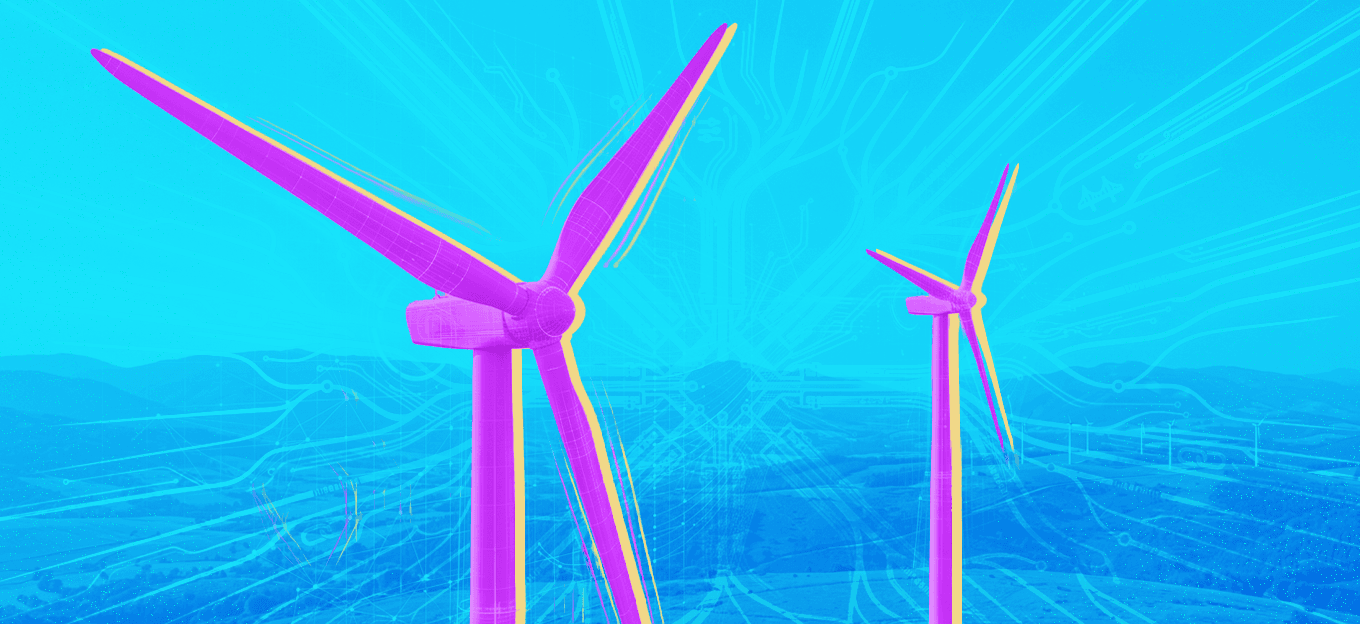
A digital twin sounds simple until you try to build one. The idea, a living digital replica of a physical asset that updates itself in real time, is easy to explain in a sentence. The engineering behind it is not. Getting sensor data, models, and analytics to work together as one coherent system is where most digital twin projects either prove their worth or quietly stall.
As CEO of MindInventory, I have watched this play out across manufacturing floors, hospital networks, and logistics fleets. The organizations that succeed treat a digital twin as a layered technical system with clear data flows, not a dashboard bolted onto existing sensors. This article breaks down that architecture in detail, explains how the pieces connect, and looks at where digital twins are actually delivering value in 2026.
What a Digital Twin Actually Is
A digital twin is a virtual representation of a physical object, process, or system that is continuously updated with real-world data and stays synchronized with its physical counterpart throughout its lifecycle.
That synchronization is the defining feature. A 3D model or a static simulation can look identical to a digital twin on screen, but if it is not receiving live data and adjusting its state accordingly, it is not a twin. It is a snapshot.
This distinction matters because a lot of marketing material blurs the line between visualization and true digital twin technology. A CAD model of a turbine is not a digital twin. A CAD model connected to live vibration, temperature, and pressure sensors, feeding a physics-based or data-driven model that updates its predictions as conditions change, is a digital twin.
The global digital twin market reflects how fast this shift from static modeling to live, connected systems has accelerated. Market research firm Grand View Research valued the digital twin market at 35.8 billion dollars in 2025, projecting growth to roughly 49.5 billion dollars in 2026 at a compound annual growth rate above 31 percent through 2033.
Industry analysts also expect digital twin support to become a near-standard feature of IoT platforms rather than an add-on, with the majority of platforms expected to offer it within the next couple of years.
The Core Architecture of a Digital Twin
Every functioning digital twin, regardless of industry, is built from the same architectural layers. The names vary between vendors, but the functions do not.
The Physical Layer
This is the real-world asset itself, instrumented with sensors, actuators, and edge devices. Temperature probes, vibration sensors, GPS trackers, flow meters, and cameras all fall into this layer.
The physical layer also includes the edge gateways that aggregate and pre-process sensor readings before they travel further into the system. This is not a trivial detail. Sending every raw reading to the cloud is expensive and slow, so edge computing is used to filter noise, compress data, and flag anomalies locally before transmission.
The Data Integration and Connectivity Layer
Sensor data has to get from the physical asset to the modeling environment reliably and with minimal latency. This layer handles that transport using protocols suited to constrained devices and industrial environments, most commonly MQTT for lightweight telemetry, OPC UA for industrial automation systems, and REST or gRPC APIs for integrating with enterprise software.
Data interoperability is one of the most underestimated challenges here. Manufacturing environments in particular tend to run a mix of legacy PLCs, modern IoT sensors, and enterprise systems that were never designed to talk to each other, and this layer has to reconcile all of it into a consistent data model.
The Digital Twin Modeling Layer
This is where the actual twin lives. It can be built three different ways, and the choice has real implications for accuracy and cost.
A physics-based model uses engineering principles, material properties, and known physical laws to simulate behavior. It is highly accurate for well-understood systems like structural loads or thermal dynamics, but it requires deep domain expertise to build and validate.
A data-driven model uses machine learning trained on historical and live sensor data to learn how an asset behaves, without requiring an explicit physics model. This approach scales faster across many similar assets but depends heavily on data quality and volume.
A hybrid model combines both, using physics as a foundation and machine learning to fill in the gaps physics alone cannot explain, such as wear patterns unique to a specific piece of equipment.
Most mature industrial deployments in 2026 lean toward hybrid models because pure data-driven twins can drift when conditions fall outside their training data, and pure physics models struggle to capture asset-specific degradation.
The Analytics and AI Layer
Once the twin has a working model, this layer is where value gets extracted. Predictive maintenance algorithms flag developing failures before they happen. Anomaly detection compares live behavior against expected baselines.
Optimization engines run what-if scenarios to test changes before applying them to the physical asset. This is also where generative and agentic AI have started to change what digital twins can do, a point worth its own section below.
The Visualization and Interaction Layer
This is the interface, whether that is a 2D dashboard, a 3D rendered scene, or an augmented reality overlay viewed through a headset on a factory floor. For operators and executives, this layer is the most visible part of the system, but it is also the least technically demanding to build.
Organizations that focus most of their budget here while under-investing in the modeling and data layers tend to end up with an impressive-looking twin that does not actually predict anything useful.
Types of Digital Twins
Digital twins are typically categorized by scope, and understanding this hierarchy helps clarify what a given project should actually target.
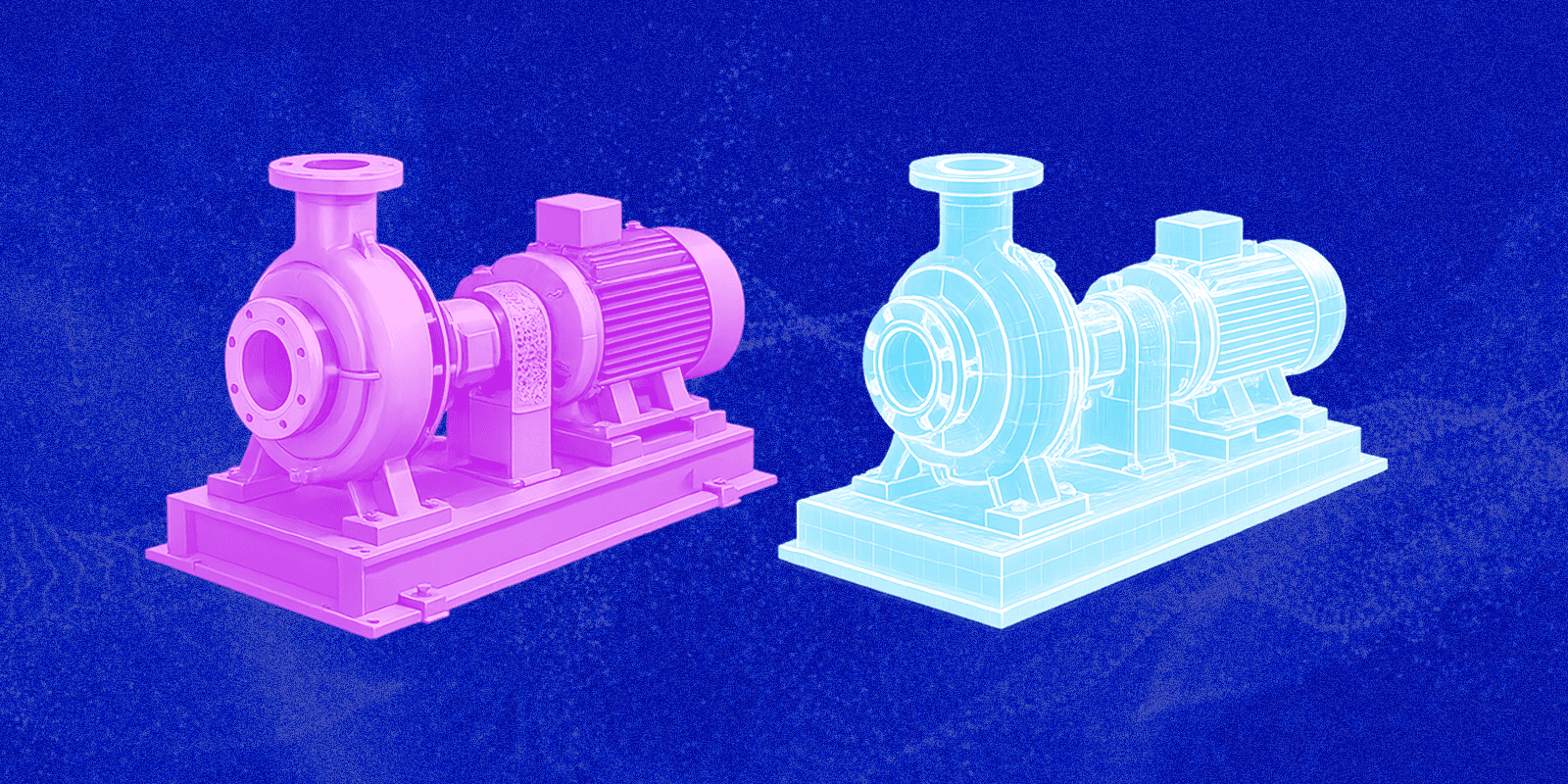
A component twin models a single part, such as a bearing or a valve, and is used to understand stress and wear at a granular level. An asset twin models a complete piece of equipment, like a pump or a vehicle, by combining multiple component twins and their interactions.
A system twin models a collection of assets working together, such as an entire production line or a building's HVAC system. A process twin goes further still, modeling an entire workflow or operation, like a full manufacturing process or a hospital's patient flow.
Most organizations start too broad. Committing to a full process twin before validating a single asset twin is a common and expensive mistake, and it is one of the clearest predictors of a stalled pilot.
How Data Flows Through a Digital Twin
The mechanics of a working digital twin follow a consistent loop. Sensors on the physical asset capture readings. Edge devices pre-process and transmit that data through the connectivity layer. The modeling layer ingests it and updates the twin's state, comparing predicted behavior against actual behavior.
The analytics layer evaluates that updated state against thresholds, historical patterns, or optimization goals. Insights are surfaced through the visualization layer, and in more advanced deployments, control commands are sent back to the physical asset automatically, closing the loop.
That closed loop- sensing, modeling, deciding, and acting- is what separates a mature digital twin from a monitoring dashboard. Many first-generation twin projects stop at visualization and never build the feedback path back to the physical asset, which caps their value considerably.
Where AI Fits into Digital Twins in 2026
The relationship between AI and digital twins has shifted meaningfully over the past two years. Earlier digital twins relied mostly on statistical models and rule-based thresholds.
Current deployments increasingly use machine learning for anomaly detection and failure prediction, and a growing number are experimenting with generative AI to summarize twin data in natural language for non-technical stakeholders, letting a plant manager ask a system why a machine's efficiency dropped rather than reading through raw telemetry charts.
Agentic AI is the newer development worth watching closely. Instead of just flagging an anomaly, an AI agent connected to a digital twin can run a simulation of several corrective actions, evaluate the predicted outcomes, and recommend or even execute the best one within pre-approved boundaries.
This is still early and requires strong guardrails, but it represents a real shift from digital twins as passive monitoring tools toward digital twins as active decision-support systems.
Digital Twin Applications Across Industries
Digital twin applications look different depending on the industry, and the technology tends to work best when the use case is specific rather than generic.
In manufacturing, digital twins are used most commonly for predictive maintenance and production line optimization, simulating changes to throughput or layout before committing capital to physical changes.
In healthcare, digital twins model individual patients or medical devices, supporting personalized treatment planning and helping validate new devices before clinical use.
In energy, utilities use digital twins of the grid and individual assets like transformers to balance load, predict equipment failure, and integrate renewable sources more reliably. BP has reported using digital twin technology across its offshore assets to optimize operations, an example of how mature the technology has become in asset-heavy industries.
In automotive and aviation, digital twins support both product design, simulating stress and performance before physical prototypes exist, and in-service monitoring of fleets.
In logistics, twins of warehouses and supply chain networks help companies model disruptions and reroute inventory before problems cascade, a use case IoT For All has covered in the context of real-time supply chain visibility.
In construction and smart buildings, digital twins increasingly follow an asset from design through construction and into long-term operations and maintenance, closing a handoff gap that has historically caused significant data loss between project phases. City-scale deployments extend this further, with digital twins supporting infrastructure monitoring and traffic modeling as part of broader smart city initiatives.
Benefits and Real Trade-Offs
The benefits organizations report most consistently are reduced unplanned downtime through predictive maintenance, faster and cheaper testing of design or process changes through simulation, and better cross-team visibility into asset performance. These are real and well documented across industrial deployments.
The trade-offs are just as real. Building an accurate model requires either deep domain expertise or large volumes of clean historical data, and most organizations underestimate how much data cleanup that requires. Integration with legacy industrial systems is frequently harder than integrating the sensors themselves.
And a digital twin that is not maintained- meaning its model is not periodically re-validated against actual asset behavior- will drift and start producing misleading predictions, sometimes without anyone noticing until a failure occurs that the twin should have caught.
Getting Started the Right Way
Organizations that get meaningful value from digital twins tend to start narrow. Pick one high-value asset or process, build a component or asset twin with a clearly defined success metric, and prove the closed feedback loop works before expanding scope. Trying to build a system-wide or process-wide twin on the first attempt is where most budgets and timelines go sideways.
The technology has matured well past the buzzword phase it was in a few years ago. What separates the projects that deliver real operational value from the ones that stall in the pilot phase is rarely the sophistication of the AI model. It is almost always the quality of the underlying architecture, the data pipeline, the model choice, and the discipline to keep the twin synchronized with reality over time.

The Most Comprehensive IoT Newsletter for Enterprises
Showcasing the highest-quality content, resources, news, and insights from the world of the Internet of Things. Subscribe to remain informed and up-to-date.

New Podcast Episode

The Future of AI-Powered Public Safety

Related Articles


Related Solutions

Digital Twins for Multipurpose Environments
Turn complex environments – like cities, factories, and buildings – into intelligent, virtual representations with real-time sensor data.
Turn complex environments – like cities, factories, and buildings – into intelligent, virtual representations with real-time sensor data.
Digimondo
Digimondo

Monitoring and Asset Control for Industrial Environments
A comprehensive, secure IIoT platform for real-time monitoring, predictive maintenance, and remote asset control.
A comprehensive, secure IIoT platform for real-time monitoring, predictive maintenance, and remote asset control.
WIKA
WIKA

Planogram Digital Twin for Retailers
Digitize reset processes, enable real-time compliance auditing, and empower store associates with instant product insights.
Digitize reset processes, enable real-time compliance auditing, and empower store associates with instant product insights.
Leverege
Leverege


Related Solutions
Buildings & Facilities
Digital Twins for Multipurpose Environments
Turn complex environments – like cities, factories, and buildings – into intelligent, virtual representations with real-time sensor data.
Digimondo
Industrial
Monitoring and Asset Control for Industrial Environments
A comprehensive, secure IIoT platform for real-time monitoring, predictive maintenance, and remote asset control.
WIKA
Retail
Planogram Digital Twin for Retailers
Digitize reset processes, enable real-time compliance auditing, and empower store associates with instant product insights.
Leverege