
Why Your Ear Could Become the Next Health-Tracking Hotspot
Why Your Ear Could Become the Next Health-Tracking Hotspot

- Last Updated: October 13, 2026
Shradha Puri
- Last Updated: October 13, 2026
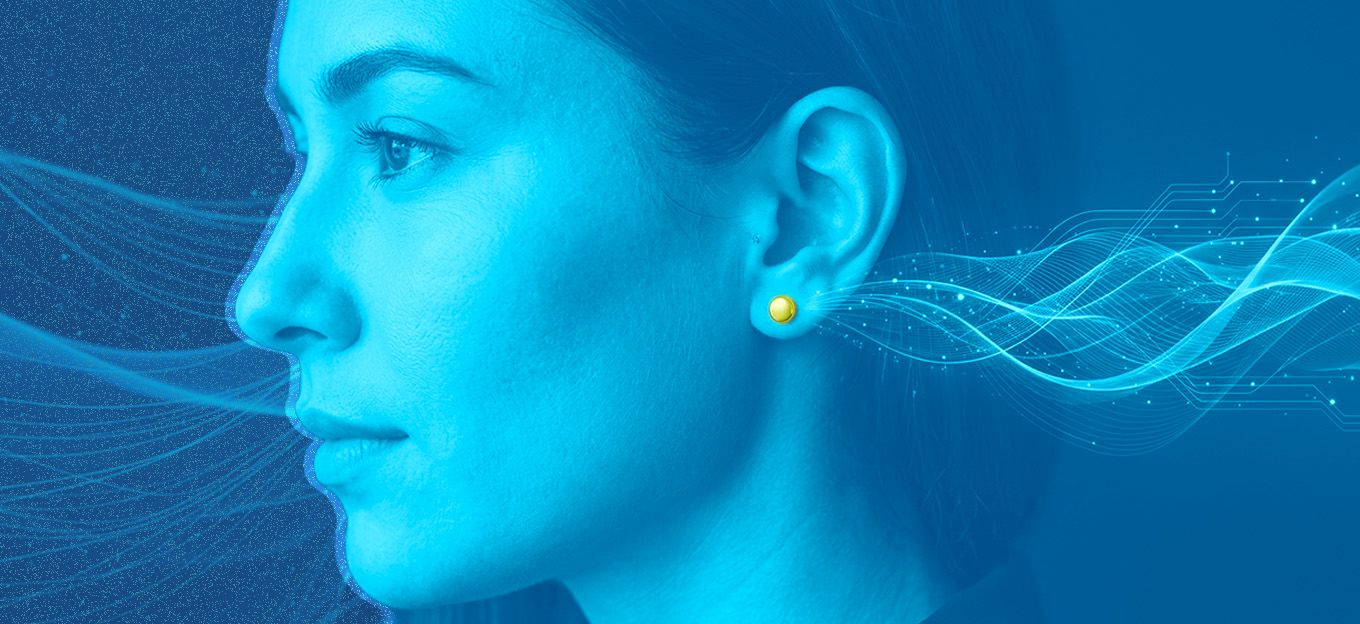
For years, the story of wearable health tech has basically been a story about the wrist. Then it moved to the finger with smart rings. Now there's a genuine push to get sensors behind your ears, and honestly, it makes more sense than it sounds.
I know "smart earrings" still sounds like a gimmick to a lot of people; it did to me as well the first time I read about it. But once you actually look at what's happening with companies, the ear starts to look less like a novelty spot and more like a genuinely smart place to put a sensor.
Why The Ear Is a Good Sensor Spot
Here's the thing: wrist wearables have always struggled with movement. Our wrists move a lot. They're exposed to temperature changes and light from the outside world, and getting a clean, stable signal (especially during exercise) has never been easy. That's part of why fingers took over with rings like Oura and Ultrahuman. Less motion, closer to the skin, and less exposure to shifting around means better readings.
The ear takes that a step further. There are major blood vessels close to the surface right behind and around the ear, and the skin there stays pretty stable in temperature compared to your hands or wrist, which are constantly exposed to whatever's going on around you. That stability is exactly what you want if you're trying to catch small, meaningful shifts in someone's body instead of just noise.
So companies are betting that ear-based sensors can pick up cleaner heart rate, temperature, and blood flow data than a lot of wrist devices manage, all while staying pretty much invisible since the sensor is doing its job disguised as jewelry. Honestly, that’s what has taken smart jewelry to the popularity it has now. The fact that they look like everyday pieces you already wear.
Brands Are Already Proving This
Many smart earring brands like Lumia Health and Incora have made devices that aren't some standalone gadgets you strap on. They’re built into an earring back, so it looks like a regular stud or hoop and just does its thing quietly.
A few things about how it actually works:
- The sensor sits close to major blood vessels in the ear, which the company says gives it a stronger, more stable signal than wrist trackers pick up
- They track roughly more than 20 metrics, including sleep stages, HRV, stress, activity, and blood flow
- The whole sensor weighs less than a gram, lighter than a coffee bean, and comes in gold, silver, and titanium finishes to match your outfits easily
- Battery life is mainly handled through a swappable system so you're not stuck charging it every night and losing overnight data
What I find genuinely interesting is where a lot of these smart earring brands started. Lumia, for instance, didn't begin as a lifestyle gadget. It came out of work with researchers at Johns Hopkins, Duke, and Harvard, originally built to help people with chronic blood flow conditions like POTS and Long COVID track what was happening to them in real time. A 2024 American Autonomic Society study found the device's readings correlated strongly with transcranial Doppler ultrasound, the gold standard for measuring cerebral blood flow, with a Pearson correlation of 0.91.
The consumer version, Lumia 2, is basically that same core sensing tech repackaged for people who just want better recovery and focus data, not a medical diagnosis.
The company just raised $7 million to push this further, on top of over $5 million in government grants, which tells you someone besides just the founders thinks ear-based sensing has legs beyond a niche product.
Then Phira Took It Somewhere Nobody Else Has
If Lumia proved the ear could handle general health metrics, Phira is testing something a lot more ambitious: hormones.
Phira came out of stealth recently with an earring-back wearable built specifically to track patterns tied to estrogen, LH, and progesterone across the menstrual cycle. And no, it's not drawing blood or doing anything invasive. It's picking up thermoregulatory signals, which are basically subtle changes in how your body manages heat behind the ear, accurate down to 0.03°C and using those patterns to follow hormone dynamics continuously instead of guessing at a single point in time.
That distinction matters more than it sounds like on paper. Every hormone test that exists right now, be it blood, urine, saliva, whatever, gives you a snapshot. One moment in a day. But hormones don't work in snapshots; they're constantly moving throughout the day and across the cycle. Even wearables that already claim to do "cycle tracking" are usually just inferring phases from wrist temperature or heart rate variability, not actually looking at hormone activity itself.
Phira, founded by Alisha Menon, ran a pilot study across 31 cycles in 12 women, comparing what the earring picked up against daily urine testing and other validated tools. Early results were peer-reviewed for an IEEE conference, and the signals lined up with expected estrogen, LH, and progesterone patterns. That's still a small sample, so it's early, but it's a real clinical comparison, not just a marketing claim.
Is This Actually Where Wearables Are Headed?
I don't think the wrist or the finger is going anywhere. Oura, WHOOP, and Apple Watch, among many well-established wearable names, aren't losing their grip anytime soon. But the ear solves a specific problem those categories haven't fully cracked, which is getting continuous, stable data without anyone having to think about wearing a device at all.
That's really the whole appeal. Rings already did a version of this; people who'd never wear a fitness band were suddenly fine wearing a ring because it just looked like jewelry. Earrings take that even further since most people already wear them daily anyway. You're not adding a new habit; you're just swapping the hardware behind something you already do.
The open questions are the same ones every new wearable category has to answer eventually. How accurate is this stuff really once it's out of a controlled pilot and into thousands of random ears with different piercings, different skin tones, different earring styles? How much does it cost once it's a finished product and not a crowdfunded prototype? And will people actually trust hormone data, especially fertility-related data, coming from a device that isn't a lab test?
Those are fair questions, and none of them are fully answered yet. But the direction is clear enough. Ear-based sensing already has a company shipping real metrics and another one running clinical pilots on something as complex as hormone tracking. That's not a lab curiosity anymore; that's an actual product category forming in real time.
So next time someone tells you their earrings are tracking their sleep or their cycle, don't be surprised. Give it another year or two, and it might just be the “normal” thing people wear, the same way a ring or a watch already is.

The Most Comprehensive IoT Newsletter for Enterprises
Showcasing the highest-quality content, resources, news, and insights from the world of the Internet of Things. Subscribe to remain informed and up-to-date.

New Podcast Episode

Building Real-Time Voice AI Experiences

Related Articles