Always-On IoT: Bridging Terrestrial and GEO Satellite Connectivity for Seamless Global Tracking
Always-On IoT: Bridging Terrestrial and GEO Satellite Connectivity for Seamless Global Tracking

- Last Updated: November 18, 2026
Giesecke+Devrient
- Last Updated: November 18, 2026
Rapid changes in IoT technology, regulations and business models make the connectivity landscape increasingly complex. A managed service provider can help enterprises navigate deployments and keep assets visible from first mile to last.
But even the best terrestrial network has limits. Enterprises running fleets, containers, and equipment across the globe still run into dead zones — the open ocean, remote mining and agricultural regions, mountain corridors, and stretches of highway between cities where cellular coverage simply doesn't reach. When an asset drops off the network, so does the visibility a business depends on to plan, protect, and optimize its operations.
Hybrid connectivity addresses these limitations by extending terrestrial coverage with satellite coverage, helping maintain connectivity in areas beyond the reach of terrestrial networks.
Why GEO Matters
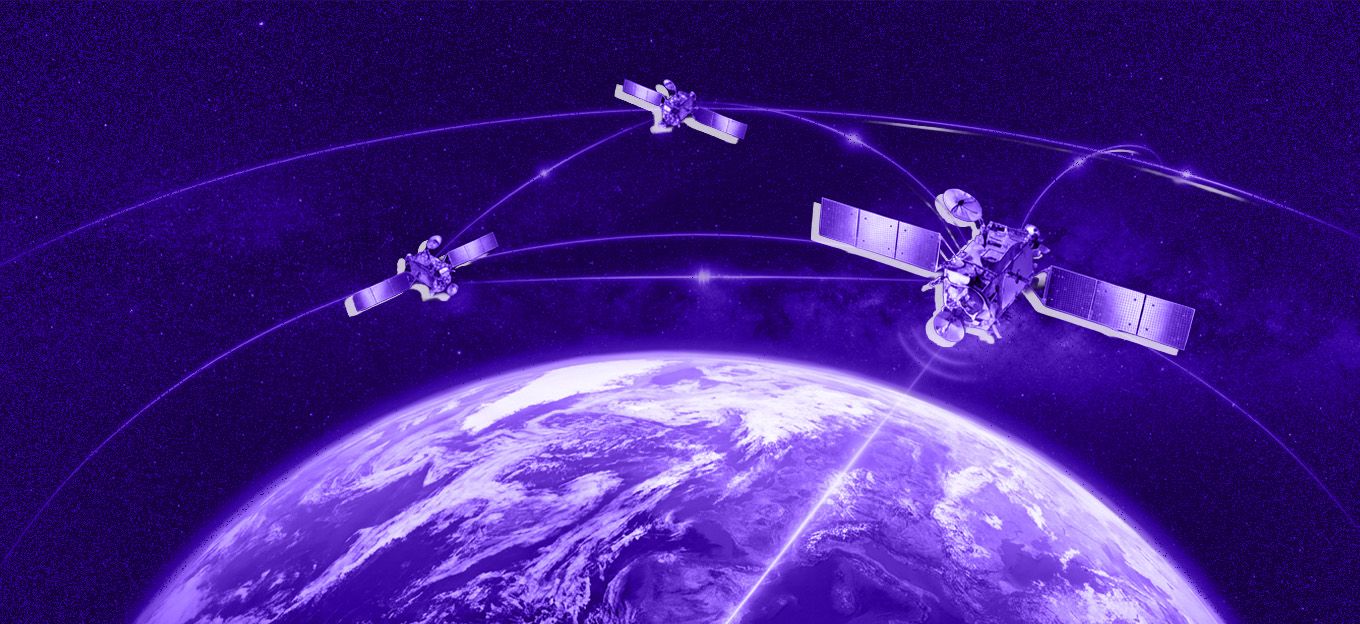
Satellite connectivity providers can draw on two main types of satellite orbit: Geostationary Earth Orbit (GEO) and Low-Earth Orbit (LEO). GEO satellites sit in a fixed position relative to the Earth, which gives them a distinct advantage over LEO constellations.
LEO satellites move constantly, and a device on the ground may need to wait for a satellite to pass overhead — in some cases, up to four hours. GEO satellites don't move relative to the Earth's surface, so they're always in position. That means connectivity is available on demand, the moment a device needs it, rather than on the satellite's schedule.
One example is Skylo, which uses GEO satellites to provide connectivity based on the 3GPP NB-IoT NTN (Non-Terrestrial Network) standard. Its technology is designed to work with compatible cellular devices, without requiring a dedicated satellite terminal. This allows satellite connectivity to be integrated alongside terrestrial networks through supported SIM-based connectivity solutions.
Practical Implications for IoT Devices
Combining terrestrial and satellite networks creates a number of benefits for enterprises operating across the world:
One SIM, Global reach.
Enterprise customers get access to both cellular and satellite networks across the world via just one SIM — no second contract, no second device profile to manage.
Automatic handoff.
When a device moves out of cellular range, it can be switched over to satellite connectivity automatically. There's no manual intervention and no separate satellite mode to activate.
No service drops, no degradation.
The switchover happens dynamically in the background. Devices stay connected and reporting, without a noticeable interruption in service.
Simpler hardware, simpler manufacturing.
Because cellular and satellite profiles live under one eSIM/SIM management framework, OEMs and device developers don't need to design around two separate connectivity stacks. That means fewer components, simpler logistics, and a faster path to market.
Real-World Applications: Protecting Critical Infrastructure and Global Supply Chains
By augmenting terrestrial cellular coverage with a non-terrestrial GEO satellite network, continuous monitoring across high-value operations can be maintained—no matter how isolated the location.
Remote Energy & Utilities Infrastructure
Energy grids, oil and gas pipelines, and water treatment facilities frequently operate far beyond the reach of standard cellular towers. Maintaining real-time telemetry across these off-grid assets is essential for safety, environmental compliance, and operational efficiency. Leveraging GEO satellites ensures that valve status updates, pressure readings, and automated emergency alerts transmit instantaneously without waiting for an orbiting satellite to pass overhead.
Remote Security & Video Surveillance
Securing perimeter sites, solar farms, and remote utility substations requires uninterrupted alarm and video telemetry. In remote dead zones—or during terrestrial network outages caused by severe weather—hybrid connectivity intelligently shifts connection paths to satellite in real time. This automated failover guarantees zero service drops, ensuring continuous site protection and immediate breach alerts.
End-to-End Transportation & Logistics
For global logistics providers, tracking shipping containers across open ocean transit dead zones or long-haul cargo fleets across vast geographies like Brazil presents constant visibility gaps. A unified SIM profile enables continuous, intermodal tracking across borders and transportation modes without requiring complex hardware reconfigurations.
Seamless Tracking, Made Simple
Combining terrestrial and satellite connectivity can extend coverage beyond the reach of terrestrial networks and simplify the integration of satellite connectivity into the wider IoT connectivity stack. This can reduce the need to manage separate connectivity solutions.

The Most Comprehensive IoT Newsletter for Enterprises
Showcasing the highest-quality content, resources, news, and insights from the world of the Internet of Things. Subscribe to remain informed and up-to-date.

New Podcast Episode

The State of LoRaWAN in 2026

Related Articles