


From IoT Monitoring to Automation: Making Water Infrastructure More Intelligent
From IoT Monitoring to Automation: Making Water Infrastructure More Intelligent
- Last Updated: November 6, 2026
My Tank - Smart Water Management
- Last Updated: November 6, 2026
Water infrastructure is often managed through manual inspections, conventional control systems, and separate monitoring tools. While these methods can support routine operations, they can make it difficult to understand what is happening across an entire water system in real time.
A tank may run low while a pump continues operating. Water consumption may increase without an obvious explanation. Equipment faults or water overflow may go unnoticed until they disrupt operations.
The Internet of Things (IoT) offers a way to address these challenges by connecting sensors, equipment, communication networks, and software platforms. However, the real value of connected water infrastructure extends beyond collecting data. It comes from turning that data into timely decisions and, where appropriate, automated actions.
Moving from monitoring to automation requires a system-level approach that combines reliable sensing, meaningful analytics, appropriate control logic, and human oversight.
Why Traditional Water Monitoring Has Limitations
Water systems involve several interconnected processes, including storage, pumping, distribution, and consumption. In commercial buildings, industrial facilities, agricultural operations, and municipal networks, these processes may be distributed across multiple locations.
Traditional monitoring approaches can create operational gaps in several ways.
Limited real-time visibility: Manual inspections provide information only at specific points in time. Conditions can change between inspections, leaving operators unaware of developing problems.
Disconnected equipment: Tank-level indicators, pump controllers, flow meters, and water-quality instruments may operate independently. Without a shared view, understanding how one component affects another becomes difficult.
Reactive maintenance: Problems such as abnormal water consumption, repeated pump operation, or unexpected level changes may only be identified after they have affected operations.
Dependence on manual intervention: Routine tasks, including checking tank levels and switching pumps on or off, can consume staff time and introduce inconsistencies.
These challenges are not necessarily caused by a lack of equipment. Often, the missing element is the ability to connect information from different parts of the system and use it to guide operational decisions.
Building an IoT-Based Water Monitoring Architecture
An effective IoT water monitoring system typically consists of four connected layers: sensing, communication, data management, and application or control.
#1: Sensing: Understanding Actual Conditions
The first step is collecting reliable information from the physical water system.
Depending on the application, this may include:
- Water level: By radar tank level sensor, measures the amount of water stored in tanks, reservoirs, and sumps.
- Flow rate and consumption: Tracks how water moves through pipelines and helps identify changes in usage.
- Pressure: Provides insight into distribution conditions and can help identify abnormal operating patterns.
- Water quality: Monitors relevant parameters such as pH, turbidity, electrical conductivity, and total dissolved solids, depending on the application.
- Equipment status: Indicates whether pumps and other connected devices are operating as expected.
- Energy consumption: Helps operators understand the energy required to pump and distribute water.
Sensor selection should reflect the operating environment, measurement range, required accuracy, installation conditions, and maintenance requirements. Collecting more data does not automatically produce better decisions; the measurements must be relevant and dependable.
#1: Connectivity: Bringing Distributed Assets Together
Water infrastructure may span rooftops, underground pump rooms, industrial sites, agricultural fields, and remote reservoirs. Communication technology must therefore suit the physical layout and operating requirements.
Wi-Fi and cellular connectivity can support applications where suitable network coverage is available. LoRaWAN can connect distributed, low-power sensors over longer distances, subject to local conditions and network design. Wired technologies such as RS-485 and Modbus remain useful for integrating industrial instruments and existing control equipment.
In many deployments, a combination of communication technologies is more practical than relying on a single protocol.
Designers must also consider power availability, signal coverage, installation costs, cybersecurity, and what happens when connectivity is interrupted. Local data buffering and store-and-forward capabilities can help preserve measurements during temporary network outages.
#3: Data Management: Turning Measurements into Useful Information
Once data is collected, it needs to be organized into a form that operators can understand.
A centralized platform can bring together information from multiple tanks, pumps, flow meters, and other connected assets. Dashboards provide a current operational view, while historical records help reveal recurring patterns and changes over time.
For example, operators may compare water entering a facility with the amount consumed across different areas. Persistent discrepancies could indicate measurement limitations, unaccounted usage, leakage, or other operational issues that require investigation.
A structured approach to water consumption monitoring can help explain how flow measurements, historical usage patterns, and comparisons between inflow and outflow support this process.
Similarly, historical tank-level and pump-status data can help identify frequent pump cycling or unusual filling patterns.
Alerts should be designed around meaningful operating conditions rather than generating notifications for every minor variation. Thresholds, alert delays, and escalation rules can help teams prioritize issues that require attention.
The goal is to move beyond displaying individual readings and develop a clearer understanding of how the entire water system behaves.
From Monitoring to Automated Decisions
Monitoring explains what is happening. Automation uses that information to take action according to defined rules.
Consider a building with an underground sump, a transfer pump, and an overhead tank. In a conventional setup, an operator may check both tanks and manually switch the pump.
An IoT-enabled system can connect level sensors to a pump controller. The controller can then operate the pump according to configured conditions.
For example:
- When the overhead tank requires water and the sump contains sufficient water, the controller can start the pump.
- When the overhead tank reaches its target level, the controller can stop the pump.
- When the sump level becomes too low, the controller can inhibit operation to help prevent dry running.
- When a sensor reading or pump condition falls outside expected limits, the system can generate an alert for investigation.
An automatic water tank pump controller illustrates how sensor inputs and predefined operating conditions can be used to control pumping without depending entirely on manual intervention.
These rules must account for the actual hydraulic arrangement, sensor reliability, pump specifications, and relevant protection requirements. The control logic should be tested before deployment.
The important distinction is that automation should respond to the needs and conditions of the system, rather than simply switching equipment on a fixed schedule.
Where Intelligent Water Management Can Make a Difference
The combination of connected monitoring and automation can support different applications, although the specific benefits depend on the infrastructure and implementation.
- Commercial buildings: Connecting overhead tanks, sumps, pumps, and flow meters can help facility teams coordinate water storage and pumping while reducing dependence on routine manual checks.
- Industrial facilities: Monitoring flow, pressure, storage levels, and relevant water-quality parameters can improve operational visibility and help teams investigate abnormal conditions.
- Agriculture and irrigation: Remote monitoring of reservoirs, borewells, and irrigation infrastructure can help operators understand water availability and coordinate pumping with irrigation requirements.
- Municipal water systems: Connected monitoring across reservoirs, pumping stations, and distribution assets can help operators identify abnormal conditions and coordinate responses across geographically distributed infrastructure.
Across these applications, IoT is most useful when it addresses a clearly defined operational problem. The objective is not to connect every available device, but to identify which measurements and actions can improve system management.
The Role of Analytics and AI
As connected systems accumulate historical data, analytics can help operators identify patterns that are difficult to recognize through individual readings.
Trend analysis can reveal recurring changes in consumption, filling times, and equipment operation. Anomaly detection can flag unusual behavior for further investigation. Where sufficient reliable data is available, machine learning models may help identify patterns associated with leakage, equipment degradation, or unexpected demand.
However, these capabilities should be implemented with realistic expectations.
An unusual flow pattern does not necessarily confirm a leak. A change in pump operating time does not automatically indicate a fault. Different operating conditions can produce similar measurements.
Analytics should therefore support investigation and decision-making rather than replace engineering judgment. Automated actions based on predictive models should also be subject to appropriate validation, safeguards, and operational constraints.
For many deployments, reliable sensor data, clear operating rules, and well-designed alerts deliver more immediate value than introducing complex AI models at the outset.
Challenges to Address Before Deployment
Moving toward automated water infrastructure requires more than installing sensors and connecting them to a dashboard.
Integration with existing systems: Older pumps, controllers, and instruments may use different interfaces or communication protocols. Integration should be assessed before equipment is selected.
Sensor reliability and maintenance: Incorrect readings can lead to unnecessary alerts or inappropriate control actions. Calibration, installation quality, diagnostics, and maintenance planning are essential.
Network resilience: Connectivity interruptions should not automatically compromise critical local operations. Suitable systems need defined offline behavior and reliable local control where required.
Cybersecurity: Connected infrastructure introduces additional access points. Authentication, access control, secure communications, software updates, and network segmentation should be part of the design.
Safety and manual override: Automated control must respect equipment limits and applicable protection requirements. Operators should have clear procedures for manual intervention and system recovery.
Scalability: A solution that works for one tank or pump may need a different architecture when expanded across multiple buildings or sites. Device management, data consistency, and centralized oversight become increasingly important as deployments grow.
Addressing these considerations early helps ensure that the system remains dependable beyond the initial pilot.
A Practical Roadmap for Moving from Monitoring to Automation
Organizations do not need to automate their entire water infrastructure at once. A phased approach can reduce implementation risk and make it easier to evaluate results.
Step 1: Identify the operational problem. Determine whether the priority is preventing overflow, reducing unnecessary pumping, improving consumption visibility, or detecting abnormal conditions.
Step 2: Establish a baseline. Record existing water usage, pump operating patterns, manual intervention, and relevant operating costs wherever reliable data is available.
Step 3: Start with monitoring. Install appropriate sensors and verify measurement quality, communication reliability, and dashboard accuracy.
Step 4: Introduce alerts and control rules. Begin with clearly defined thresholds and straightforward automation logic. Test normal operation, abnormal conditions, and failure scenarios.
Step 5: Evaluate performance. Compare results with the baseline. Useful indicators may include overflow incidents, pump runtime, energy consumption, response time, and unaccounted water usage.
Step 6: Expand based on evidence. Once the initial deployment demonstrates value, extend the approach to additional assets and locations while maintaining consistent security and operational standards.
This approach allows organizations to progress from visibility to control without introducing unnecessary complexity at the beginning.
Evolution of Water Infrastructure
The evolution of water infrastructure is not simply about adding connected sensors. It is about creating a system in which measurements, equipment, and operational decisions work together.
IoT provides the foundation for continuous monitoring. Connectivity brings distributed assets into a shared operational view. Analytics helps identify patterns and anomalies, while automation enables equipment to respond to defined conditions.
The most effective deployments combine these capabilities with reliable sensing, appropriate control logic, cybersecurity, and human oversight.
As water systems become more complex and operational efficiency becomes increasingly important, the shift from monitoring to automation offers a practical path toward more informed, responsive, and manageable infrastructure.
The central principle is straightforward: collect meaningful data, understand what it reveals, and use it to make better operational decisions.
The Most Comprehensive IoT Newsletter for Enterprises
Showcasing the highest-quality content, resources, news, and insights from the world of the Internet of Things. Subscribe to remain informed and up-to-date.

New Podcast Episode

The State of LoRaWAN in 2026

Related Articles

Related Solutions
Power Plant Safety for Operators
Deploy instant, AI-powered monitoring across power generation facilities with a portable, plug-and-play solution.
Deploy instant, AI-powered monitoring across power generation facilities with a portable, plug-and-play solution.
Iveda
Iveda
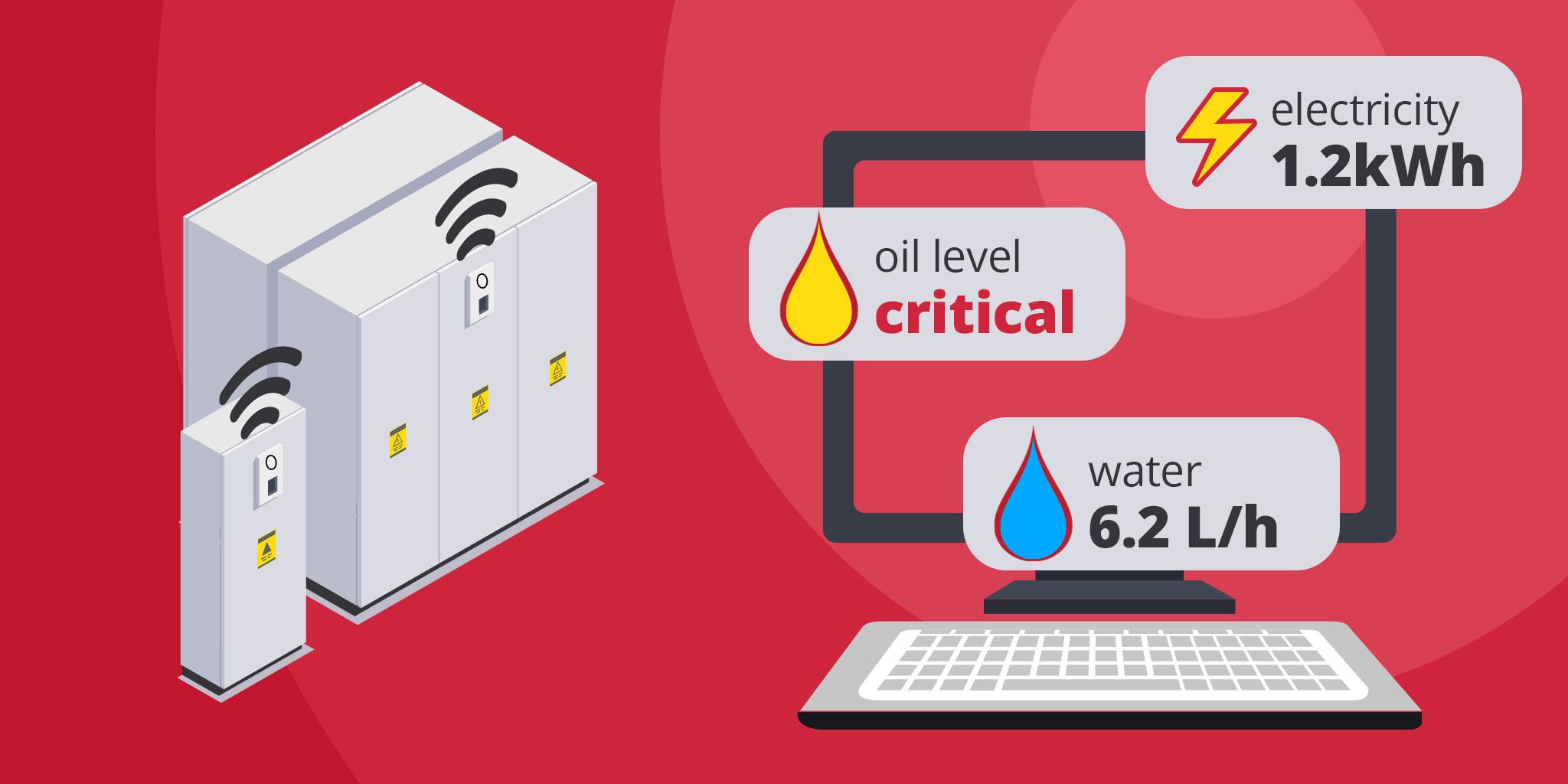
Energy Metering for Utilities
Unified metering for electricity, water, oil, and gas to reduce costs, improve efficiency, and support ESG reporting.
Unified metering for electricity, water, oil, and gas to reduce costs, improve efficiency, and support ESG reporting.
akenza
akenza

Smart Metering for Infrastructure
Automated meter readers for gas, water, and electric to enable accurate billing, simplified sub-metering, and insights.
Automated meter readers for gas, water, and electric to enable accurate billing, simplified sub-metering, and insights.
Smarter Technologies
Smarter Technologies

Related Solutions
Utilities
Power Plant Safety for Operators
Deploy instant, AI-powered monitoring across power generation facilities with a portable, plug-and-play solution.
Iveda
Utilities
Energy Metering for Utilities
Unified metering for electricity, water, oil, and gas to reduce costs, improve efficiency, and support ESG reporting.
akenza
Utilities
Smart Metering for Infrastructure
Automated meter readers for gas, water, and electric to enable accurate billing, simplified sub-metering, and insights.
Smarter Technologies