



RTLS in 2026 — What Has Changed and Why It Matters Now
RTLS in 2026 — What Has Changed and Why It Matters Now

- Last Updated: June 3, 2026
Penguin Location Services
- Last Updated: June 3, 2026
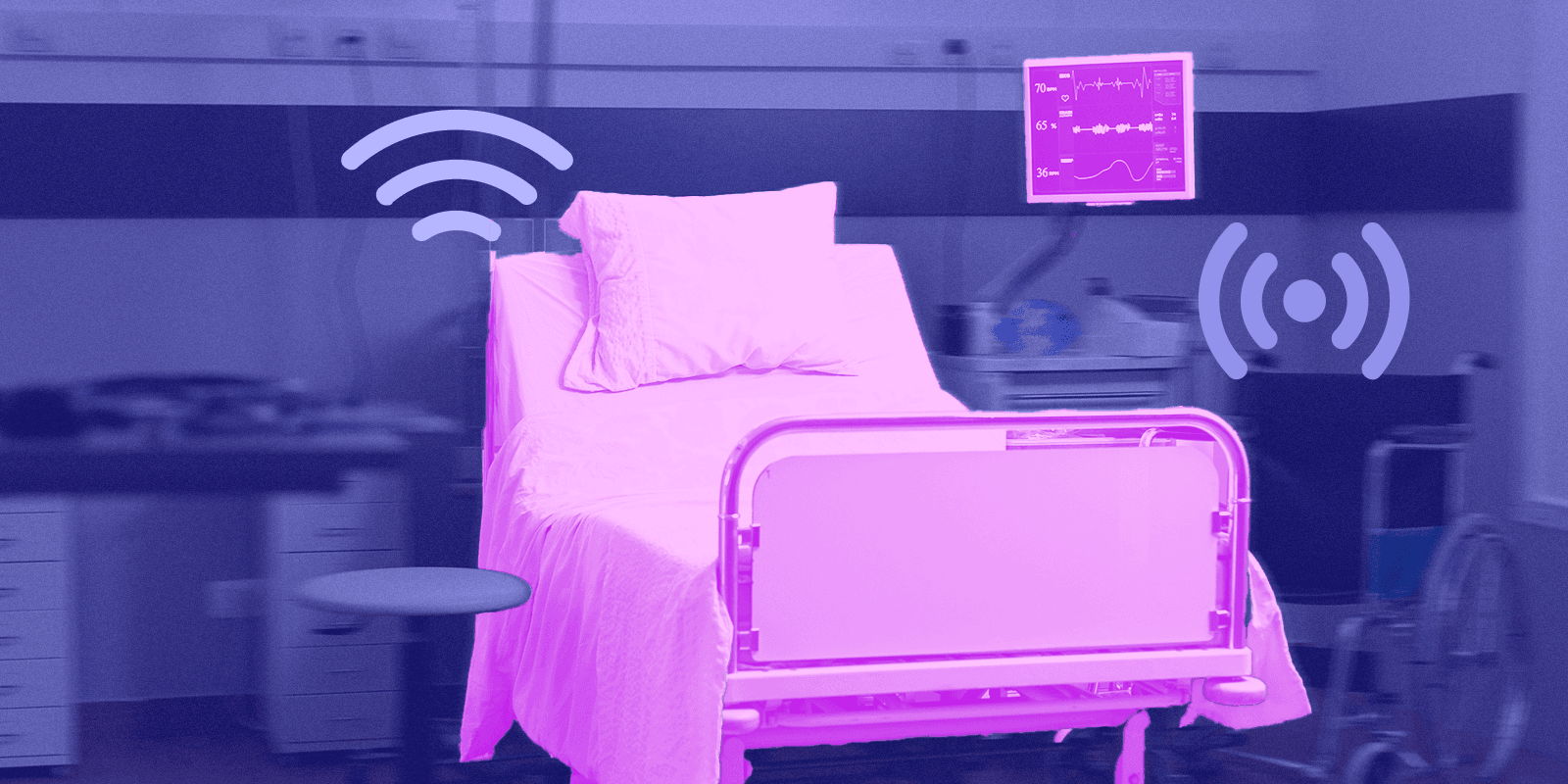
Hospitals have talked about Real-Time Location Systems for over a decade. The technology has been available in various forms since the early 2000s. Yet by most industry estimates, fewer than 25 percent of U.S. hospitals have deployed RTLS in any meaningful capacity.
For a technology with well-documented clinical and operational benefits, this adoption gap is striking — and understanding why it persisted for so long reveals what has finally changed.
The Adoption Barrier Was Never About Value
The business case for RTLS in healthcare has been clear for years. One-third of nurses report spending at least an hour per shift searching for equipment — time that directly displaces patient care.
The Bureau of Labor Statistics reports that healthcare workers experience workplace violence at rates four times higher than in other industries. Patient elopement, infant security incidents, and equipment loss create measurable liability and compliance risk.
Hospitals that have deployed RTLS consistently report significant returns. A major health system in North Carolina documented millions in annual savings derived from asset management improvements, staff efficiency, and the elimination of redundant systems. The value was never in question.
The barrier was cost and complexity.
"The challenge was never proving that location intelligence works. The challenge was making it accessible to hospitals that cannot absorb a seven-figure infrastructure investment before seeing a single result."
First-generation RTLS platforms required proprietary hardware — infrared emitters, ultrasound sensors, specialized receivers, and custom cabling — installed in every room, hallway, and clinical area.
A mid-size hospital could easily face a multi-million-dollar deployment before a single nurse badge or asset tag was activated. The infrastructure was single-vendor, meaning that switching costs were high, maintenance was expensive, and upgrade cycles were dictated by the vendor rather than the hospital.
For large academic medical centers with dedicated capital budgets for technology, this model was manageable. For the thousands of community hospitals, critical access hospitals, and regional health systems operating on thin margins, it was not.
What Changed: Three Converging Shifts
Three developments have converged to fundamentally alter the RTLS landscape for hospitals.
#1: BLE 5.1
The ratification of Bluetooth Low Energy 5.1 by the Bluetooth Special Interest Group introduced capabilities that enable significantly more precise indoor positioning than earlier Bluetooth versions. Earlier BLE-based RTLS relied on signal strength (RSSI) to estimate distance, which is notoriously unreliable indoors due to multipath interference — signals bouncing off walls, ceilings, and equipment.
BLE 5.1 provides richer signal data at the physical layer. When combined with advanced machine learning algorithms, this data can be processed to deliver consistent room-level and sub-room accuracy using standard, off-the-shelf BLE hardware — without proprietary antennas, infrared supplements, or ultrasound overlays.
The infrastructure implication is significant. Many hospitals already have BLE-capable access points deployed as part of their enterprise Wi-Fi networks from vendors like Cisco Meraki, Juniper Mist, and Aruba. In these environments, a substantial portion of the RTLS receiver infrastructure is already in place. The hospital is adding a software layer and tags — not rebuilding its physical plant.
#2: AI
The first generation of RTLS answered one question: where is this thing right now? A dot on a map. Useful, but limited.
The current generation — increasingly described as operational intelligence — uses the continuous stream of location data generated by RTLS to feed machine learning models that detect patterns, predict problems, and trigger automated workflows.
According to Deloitte, healthcare organizations that integrate AI with operational data streams are beginning to shift from reactive management to predictive decision-making. In an RTLS context, this means a hospital does not simply track IV pumps — it predicts which units will face equipment shortages tomorrow morning based on historical movement patterns and upcoming admission forecasts.
A hospital does not simply respond to a nurse pressing a duress badge — the system identifies that a specific behavioral health unit is generating escalating duress patterns over time, signaling an emerging staffing or safety issue before a critical incident occurs.
The American Hospital Association has documented the financial pressures driving hospitals toward operational efficiency tools. With negative median operating margins in recent years and ongoing staffing shortages, the ability to do more with existing resources — rather than purchasing more equipment or hiring more staff — has become an operational imperative.
#3: Interoperability
Early RTLS platforms operated as standalone systems with their own dashboards, their own data silos, and limited integration capability. This created a visibility problem: location data lived in one system, while the EHR, nurse call, CMMS, access control, and bed management platforms each operated independently.
Modern RTLS platforms are built to integrate. They expose location data through standard APIs and connect to clinical and operational systems so that location events can trigger actions across the enterprise.
When a tagged patient moves from pre-op to the operating room, the surgical scheduling system updates. When a tagged piece of equipment enters a soiled utility room, the CMMS flags it for cleaning. When a staff badge enters a restricted area outside of scheduled hours, access control logs the event.
This interoperability transforms RTLS from a tracking tool into a coordination layer — one that connects existing hospital systems through the shared context of location.
Where RTLS Delivers Value Today
The use cases for healthcare RTLS have matured beyond pilots and proofs of concept. Hospitals deploying current-generation systems are reporting measurable outcomes across several domains.
Asset Management
The HIMSS Global Health Conference has highlighted that an estimated $14 billion is wasted annually in the United States due to inefficient medical equipment management. RTLS addresses this by providing real-time visibility into equipment location, utilization, and availability — eliminating the need for nurses to physically search for devices and enabling administrators to right-size their equipment inventory based on actual usage data rather than guesswork.
Staff Safety and Duress
Workplace violence in healthcare is escalating. National Nurses United reported that 48 percent of nurses have experienced increased violence since the start of the pandemic. RTLS-enabled duress badges allow staff to discreetly trigger location-specific alerts with a single button press, ensuring security teams can respond to the precise point of need — not to a general zone or floor. For behavioral health units and emergency departments, where violence risk is highest, this capability directly impacts staff retention and safety culture.
Patient Safety
Patient elopement — when patients leave a facility without authorization — represents both a clinical risk and a liability exposure. In senior care environments, wander prevention is a core safety requirement. RTLS provides continuous monitoring of tagged patients with automated alerts when predefined boundaries are crossed, enabling staff intervention before the patient reaches an exit.
Infant protection systems use the same underlying technology to monitor tagged newborns and trigger lockdowns if a tagged infant approaches an unauthorized exit zone, addressing one of the most acute safety concerns in maternity units.
Workflow Visibility
Beyond tracking individual assets and people, RTLS generates data on how staff, patients, and equipment move through clinical processes over time. This data reveals bottlenecks that are invisible to human observation — a pre-op area where patients consistently wait longer than necessary, an equipment distribution pattern that creates shortages on one unit while another has idle surplus, or a discharge process where delays at one step cascade through the rest of the day.
By measuring these patterns automatically and continuously, RTLS provides the evidence base for operational improvements that would otherwise require expensive consulting engagements or manual time-and-motion studies.
What This Means for Hospital Decision-Makers
The RTLS market in 2026 looks fundamentally different from even five years ago. The technology has moved from proprietary infrastructure and seven-figure commitments to standards-based hardware, phased deployments, and integration-first architectures.
For hospital CIOs, COOs, and clinical operations leaders evaluating RTLS today, three considerations are worth prioritizing:
Start with a single high-impact use case
Staff duress in behavioral health, asset tracking in the emergency department, or infant protection in the maternity ward are common starting points that deliver measurable results quickly and build organizational confidence for expansion.
Evaluate infrastructure requirements honestly
Understand what BLE-capable hardware you already have deployed and what a standards-based RTLS actually requires versus what legacy platforms demanded. The gap is often smaller than expected.
Think beyond tracking
The strategic value of RTLS is not in knowing where things are — it is in what you do with that knowledge. Platforms that integrate with your existing clinical and operational systems and expose data through standard APIs will deliver compounding value over time as AI-driven analytics mature.
The hospitals that will benefit most from RTLS are not necessarily the largest or the most technology-forward. They are the ones that recognize location as a foundational data layer — one that, once established, makes every other system in the enterprise smarter.

The Most Comprehensive IoT Newsletter for Enterprises
Showcasing the highest-quality content, resources, news, and insights from the world of the Internet of Things. Subscribe to remain informed and up-to-date.

New Podcast Episode

IoT Is Finally Delivering

Related Articles

Related Solutions

Automated Clinical Workflow
RTLS to enhance care with visibility into the location and status of your patients, staff, and equipment.
RTLS to enhance care with visibility into the location and status of your patients, staff, and equipment.
CenTrak
CenTrak
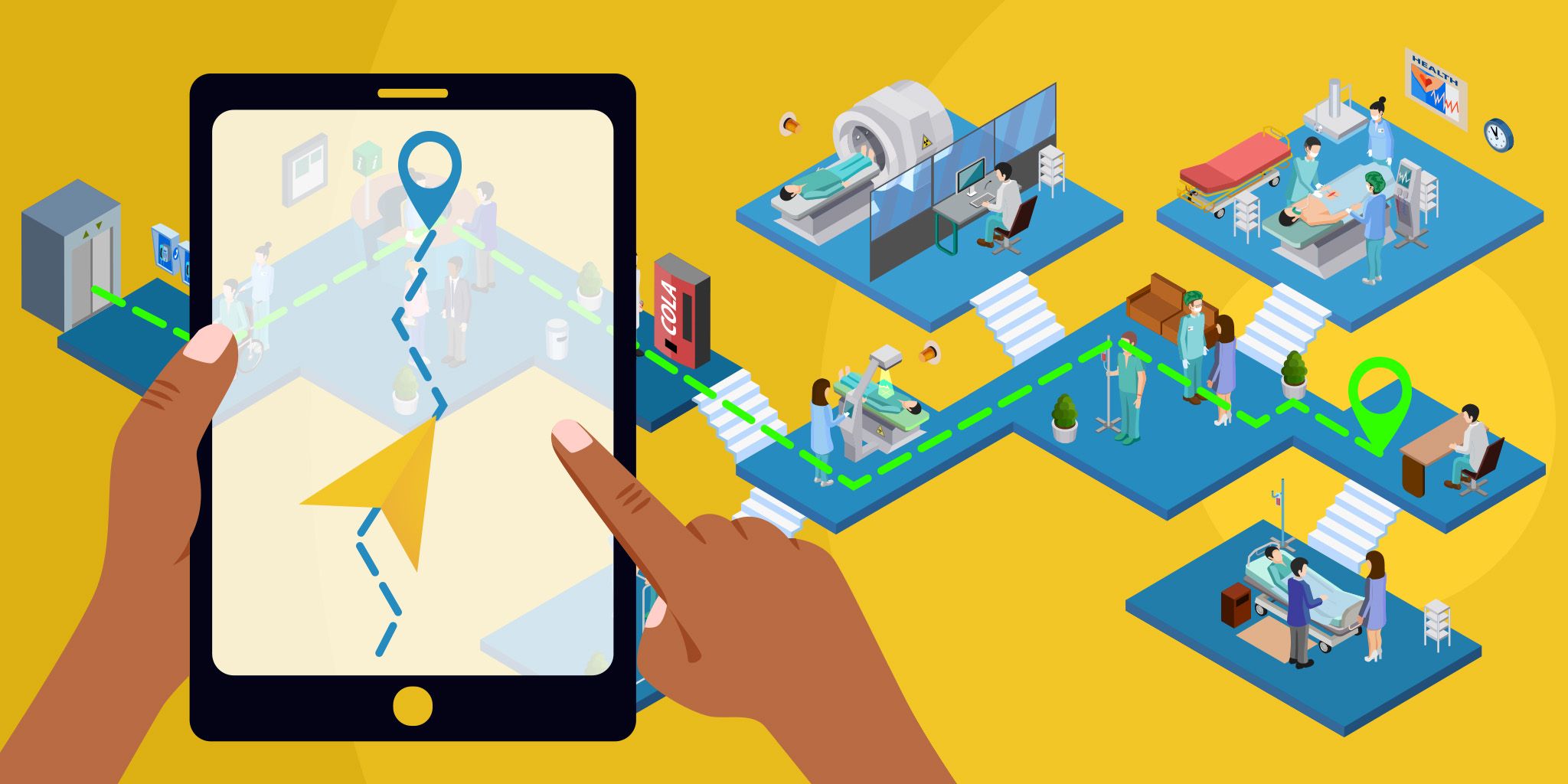
RTLS for Smart Healthcare
Real-time locating enables hospitals to track patients, staff, and equipment while improving safety, efficiency, and compliance.
Real-time locating enables hospitals to track patients, staff, and equipment while improving safety, efficiency, and compliance.
Blueiot
Blueiot

RTLS Asset Tracking and Management for Hospitals
Real-time visibility into the location and status of critical equipment to reduce costs, increase efficiency, and improve patient safety.
Real-time visibility into the location and status of critical equipment to reduce costs, increase efficiency, and improve patient safety.
Vizzia Technologies
Vizzia Technologies

Related Solutions
Healthcare
Automated Clinical Workflow
RTLS to enhance care with visibility into the location and status of your patients, staff, and equipment.
CenTrak
Healthcare
RTLS for Smart Healthcare
Real-time locating enables hospitals to track patients, staff, and equipment while improving safety, efficiency, and compliance.
Blueiot
Healthcare
RTLS Asset Tracking and Management for Hospitals
Real-time visibility into the location and status of critical equipment to reduce costs, increase efficiency, and improve patient safety.
Vizzia Technologies