



AI Smart Glasses Are IoT Edge Devices. Most People Don't Think About Them That Way.
AI Smart Glasses Are IoT Edge Devices. Most People Don't Think About Them That Way.

- Last Updated: September 17, 2026
Ben Hartwig
- Last Updated: September 17, 2026

The public conversation around AI glasses tends to focus on what they can do: answer questions, take photos, play audio, translate language. The IoT conversation the one about what they actually are architecturally is happening at a quieter register.
That is worth changing. AI glasses are not just a consumer wearable category. They are a class of IoT edge devices with a specific sensor stack, a constrained compute profile, a companion-app dependency, and a set of data privacy obligations that map almost exactly onto what teams building industrial or enterprise IoT hardware already deal with. Understanding them through that lens is more useful than treating them as a smartphone accessory.
What Is Actually in the Hardware Stack?
A current-generation AI smart glasses device typically includes:
- A camera module: usually 12MP or similar, mounted in the frame bridge or temple, capable of stills and short video
- Dual microphones: for voice command detection and audio recording, often with beamforming for noise rejection
- Open-ear speakers: bone conduction or directional audio; no passive noise isolation by design
- Accelerometer and IMU: for motion sensing, activity detection, and context inference
- A low-power SoC: running edge inference for keyword spotting, basic context classification, and assistant interaction.
- Bluetooth LE + companion app bridge: the primary connectivity path; most current devices are not independently cellular
That last point is significant for anyone thinking about deployment architecture. The glasses themselves are not autonomous IoT nodes; they depend on a tethered smartphone for connectivity, cloud access, and the heavier AI workloads. This is a deliberate design choice, not a limitation: it lets manufacturers keep the frame lightweight and the battery small, which is the single most important constraint in wearable hardware.
The Edge/Cloud Partition
Where intelligence lives in an AI glasses system is an interesting architectural question. The current answer is roughly as follows.
On-device (edge): Wake-word detection, low-latency audio routing, image capture triggering, basic activity classification. Anything where 200ms+ round-trip to cloud would break the user experience or consume too much bandwidth.
Cloud (via companion app): Natural language understanding, image recognition, multimodal AI responses, memory, and context across sessions. Anything requiring model scale that won't fit within the thermal and power envelope of a small wearable SoC.
This split is familiar to anyone who has designed a voice-activated IoT device. The hardware handles the always-on, low-power perception loop. The cloud handles the reasoning. The companion app is the broker, which is also where most of the security surface lives. It is also worth noting that as AI takes on more of the decision-making workload, the question of human-in-the-loop oversight becomes more relevant, particularly for enterprise deployments where AI-assisted actions need to be auditable.
As on-device AI inference capabilities improve (and they are improving rapidly), the balance will shift toward the edge. Models that currently require a cloud call are being quantized and compressed for local execution. For glasses specifically, this matters because it reduces latency, improves offline capability, and substantially changes the privacy calculus.
Privacy Architecture: The Hardest Part to Get Right
For IoT practitioners, the privacy challenges posed by AI glasses are well recognized. A device with a camera and microphones, worn in public or professional settings, collecting contextual data this is not categorically different from a smart doorbell or a wearable health monitor. The regulatory obligations are similar; the consent UX problem is harder.
Most current devices solve the active-recording disclosure problem with a hardware LED indicator—a light visible to bystanders when the camera is actively capturing. This is a meaningful design choice, but it only covers one surface. The ambient-sensing functions (wake-word listening, motion tracking, environmental audio) run continuously and are the ones industry analysts expect to face the most regulatory scrutiny as the category scales.
The principles that apply in other IoT contexts apply here too:
- Data minimization: capture what the use case requires; don't instrument broadly and filter later
- On-device processing preference: anything that can be inferred locally reduces cloud exposure.
- Explicit consent surfaces: for any data that persists beyond the session
- Clear retention and deletion paths: especially for audio and visual data captured in third-party environments
These are solvable problems, but they require intentional design from the product's first architecture meeting, not a privacy-review retrofit before launch.
What the Current Generation Demonstrates
Commercial products in this space are useful as reference implementations of the architectural patterns above. Devices like these AI sunglasses with a camera from the Oakley Meta line built on Meta's AI platform in collaboration with an established eyewear manufacturer show one approach to the hardware tradeoffs: established optical design expertise handles the form factor, a known AI platform handles the software stack, and the device stays thin by routing heavier inference workloads through the companion app bridge.
That modular approach, separating optical/wearability design from the software platform and cloud AI, is a pattern likely to persist as the category matures. It mirrors what happened in industrial IoT when generic connectivity modules and platform-as-a-service offerings decoupled hardware manufacturing from software development. As connected hardware increasingly becomes a platform substrate rather than a static endpoint, we should expect smart glasses to follow the same trajectory: the frame ships once, the intelligence keeps evolving over the air.
What to Watch
A few developments worth tracking for anyone building in or adjacent to this space. According to market forecasts, smart glasses are projected to be the fastest-growing wearable segment through 2030, driven primarily by enterprise rather than consumer adoption, which makes the architectural and governance questions below particularly timely:
- On-device model compression: the Qualcomm Snapdragon AR Gen 2 and similar chipsets are pushing more capable inference onto wearable SoCs; this will change the edge/cloud partition meaningfully over the next 18-24 months
- Third-party developer access: Meta has begun opening the platform on its glasses to third-party apps, which creates an IoT-adjacent ecosystem question: how do you manage data governance when the device runs code you didn't write?
- Regulatory movement in the EU: the AI Act and related GDPR guidance on wearable recording are still being interpreted; teams building enterprise deployments in European markets should watch this closely
Conclusion
AI smart glasses are a genuinely interesting IoT hardware category not because they are novel, but because they compress a lot of the design tensions the field has been working through for years into a small, socially visible, always-on form factor. The sensor stack, connectivity architecture, edge/cloud partition, and privacy challenges are all familiar problems in a new enclosure.
The teams most likely to build something durable in this space are the ones who approach it as an IoT product design challenge rather than a consumer electronics one. The engineering decisions that look like UX choices where computation runs, what data persists, how consent is surfaced are actually the structural decisions that determine whether the product can scale.

The Most Comprehensive IoT Newsletter for Enterprises
Showcasing the highest-quality content, resources, news, and insights from the world of the Internet of Things. Subscribe to remain informed and up-to-date.

New Podcast Episode

IoT Is Finally Delivering

Related Articles


Related Solutions

Smart Community Management for HOAs
AI-powered community monitoring with real-time visibility into entrances, parking, and shared spaces.
AI-powered community monitoring with real-time visibility into entrances, parking, and shared spaces.
Iveda
Iveda

Construction Site Safety Monitoring
AI-powered wearables for real-time PPE compliance monitoring, hazard detection, and incident documentation.
AI-powered wearables for real-time PPE compliance monitoring, hazard detection, and incident documentation.
Iveda
Iveda
Workers' Compensation Fraud Prevention
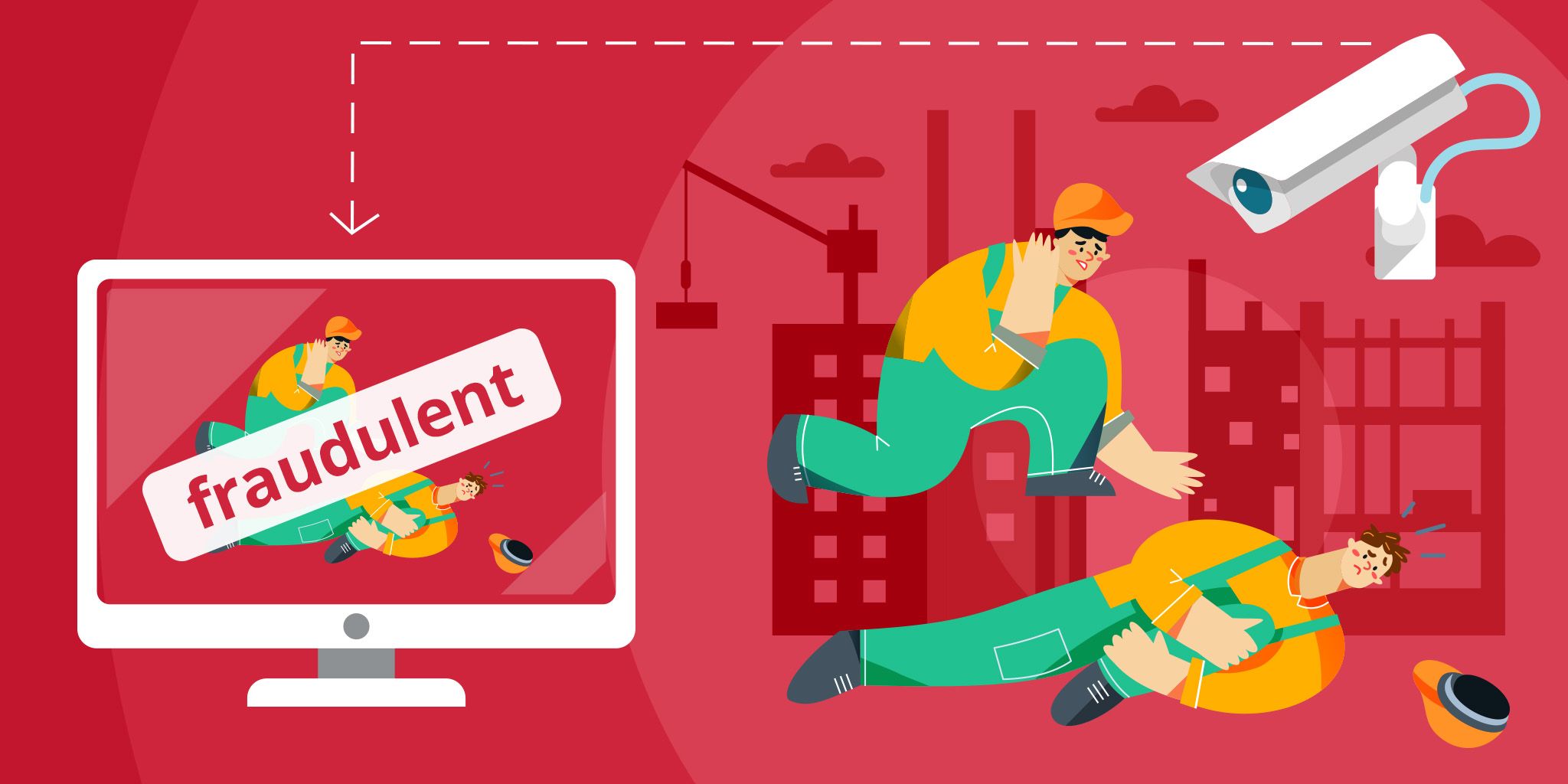
Quickly verify claims, reduce investigation time, and protect your bottom line with AI-powered video surveillance and analytics.
Quickly verify claims, reduce investigation time, and protect your bottom line with AI-powered video surveillance and analytics.
Iveda
Iveda

Related Solutions
Buildings & Facilities
Smart Community Management for HOAs
AI-powered community monitoring with real-time visibility into entrances, parking, and shared spaces.
Iveda
Construction
Construction Site Safety Monitoring
AI-powered wearables for real-time PPE compliance monitoring, hazard detection, and incident documentation.
Iveda
Construction
Workers' Compensation Fraud Prevention
Quickly verify claims, reduce investigation time, and protect your bottom line with AI-powered video surveillance and analytics.
Iveda