



When Your Store Knows More Than Your Staff: AI and IoT in Modern Retail
When Your Store Knows More Than Your Staff: AI and IoT in Modern Retail

- Last Updated: July 1, 2026
SapientPro
- Last Updated: July 1, 2026

There is a version of retail that most business owners have heard about in conference talks and vendor pitches: the store that predicts what customers want before they ask, adjusts prices in real time, keeps stock levels current without a manager lifting a finger, and builds a detailed picture of shopper behavior from nothing more than anonymous foot traffic.
It sounds speculative, yet the underlying technology is already deployed in mid-market retail at a scale that would have seemed implausible five years ago.
The reason it is becoming accessible is not solely that AI has gotten cheaper. AI and IoT started working together in ways that multiply the value of each, and that combination is what changed the economics.
What the Combination Actually Does
IoT hardware – shelf sensors, RFID tags, connected cameras, point-of-sale terminals – produces a continuous stream of physical-world data. The problem has never been the absence of that data. Most retailers who have invested in connected infrastructure are sitting on more raw signals than they know what to do with. What AI contributes is the ability to read that signal at a speed and granularity that no human team can match, and to act on it in operational time rather than reporting time.
That gap is worth dwelling on. Retail analytics has existed for decades. What is different now is that the loop between observation and action can close in minutes rather than weeks. A demand-forecasting model fed by real-time shelf sensors does not produce a weekly reorder report; it triggers a purchase order when stock drops below a dynamically calculated threshold, accounting for current weather, local events, and the purchase velocity of the past six hours.
That kind of responsiveness requires both sides of the equation. The IoT layer supplies the physical facts; the AI layer supplies the interpretation and the decision.
The Areas Where This Is Already Working
Stock Management & Supply Chain
This is the most mature application area, and the evidence for its commercial value is substantial. McKinsey research on retail operations has consistently found that AI-driven stock management reduces overstock and stockout events across categories by meaningful margins, often cutting carrying costs by 20 to 30 percent in deployments where the data infrastructure was already in place.
The IoT component here is the real-time visibility layer – warehouse sensors, connected shelving, delivery tracking – that gives the AI model something accurate to work with.
Customer Behavior & Store Layout
Foot-traffic analytics using anonymized video feeds and infrared sensors have moved well past the experimental stage. Merchants are using this data to test layout changes, measure the effect of promotional placements, and identify which store zones convert versus which ones attract dwell-time without a purchase. Raw path data, read through a trained model, resolves into legible behavioral patterns that a manual store audit would take months to approximate.
Dynamic Pricing & Personalization
This is where the business case gets complicated in an interesting way. Price elasticity modeling fed by real-time sales velocity, competitor data, and demand signals from connected POS systems gives merchants the ability to adjust prices across categories in ways that static promotional calendars never allowed.
Some have found that the gains from precision pricing outweigh the gains from all other AI investments combined – a claim that deserves scrutiny, granted, yet the underlying logic holds when the live data feeding the model is reliable.
Predictive Maintenance For Physical Assets
This one tends to get overlooked in retail-focused AI discussions, even though it is operationally significant. Refrigeration units and HVAC systems fail in predictable patterns when you have the sensor data to recognize the precursors, and the same logic applies to automated checkout lanes and escalators.
A Deloitte analysis of industrial asset management found that predictive approaches reduce unplanned downtime by up to 50 percent compared to schedule-based maintenance – a finding that holds for any retailer with significant physical infrastructure.
What Deployment Actually Requires
The gap between a compelling demo and a working deployment is where most retail AI projects stall, and it is worth being direct about what that gap consists of.
Data Infrastructure
AI models trained on stale or incomplete data produce confident answers that are wrong. Before a retailer invests in any AI application layer, the IoT data pipeline needs to be producing clean, timestamped, consistently formatted records at the required granularity. This is engineering work rather than procurement work, and it is usually where projects run into unexpected costs.
Integration with Existing Commerce Systems
The AI layer needs to read from and write to the systems that actually run the business: the stock management platform, the e-commerce backend, the POS terminal network. In practice, this means the most capable AI applications in retail are components of a broader architecture rather than standalone tools.
Understanding how AI fits into that architecture, and what it realistically demands from the systems around it, is one of the more consequential decisions a retailer makes before committing to a specific approach. On that count, AI-powered recommendation engines alone account for a measurable share of total revenue in mature e-commerce deployments, which gives some indication of what is at stake in getting the integration layer right.
Change in Decision Making
This is the part that technology vendors tend to underemphasize. An AI system that recommends a reorder or a price adjustment is only valuable when someone in the organization is structured to act on that recommendation promptly.
Merchants who have extracted the most from AI investments have usually redesigned some portion of their workflow to accommodate the new decision-making speed. The technology does not manage that organizational adjustment; the business does.
A Reasonable Way to Think About Risk
The objections to AI-IoT investment in retail are understandable. The upfront cost of connected sensor infrastructure is real. The work required to connect AI applications to legacy systems is often heavier than initial scoping suggests.
And the performance improvements, real on average, are not uniform across retail contexts – what works for a grocery chain with 200 SKUs per square foot does not necessarily transfer to a specialty merchant.
A more productive framing for most mid-market businesses is to ask which specific problem the investment is meant to address, and whether a connected AI application addresses that problem better than the alternatives.
The ones who have gotten the most from this technology have generally started with one identifiable operational failure – excess stock in a particular category, high unplanned maintenance costs, poor conversion in a specific store zone – and built the data and AI layer around that failure rather than deploying a general-purpose platform and waiting for returns to materialize.
That problem-first approach is also what tends to produce the business case that justifies the next investment. The technology is capable of more than most mid-market retailers are currently extracting from it. Getting there is less a matter of ambition than of sequence.

The Most Comprehensive IoT Newsletter for Enterprises
Showcasing the highest-quality content, resources, news, and insights from the world of the Internet of Things. Subscribe to remain informed and up-to-date.

New Podcast Episode

Building Real-Time Voice AI Experiences

Related Articles



Related Solutions
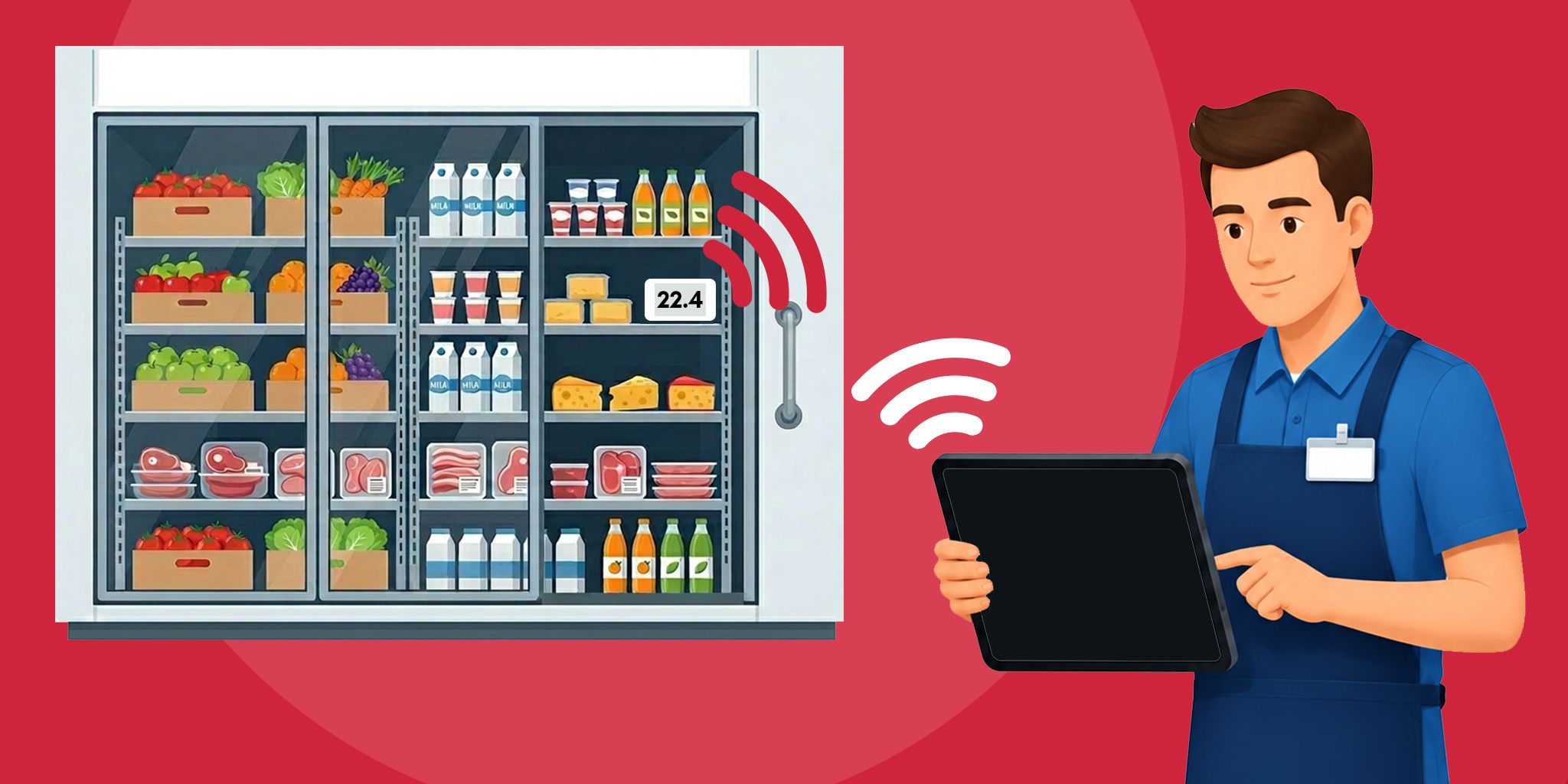
Food Safety Monitoring
Ensure food safety and eliminate manual processes with automated compliance and food condition tracking.
Ensure food safety and eliminate manual processes with automated compliance and food condition tracking.
SmartSense by Digi
SmartSense by Digi
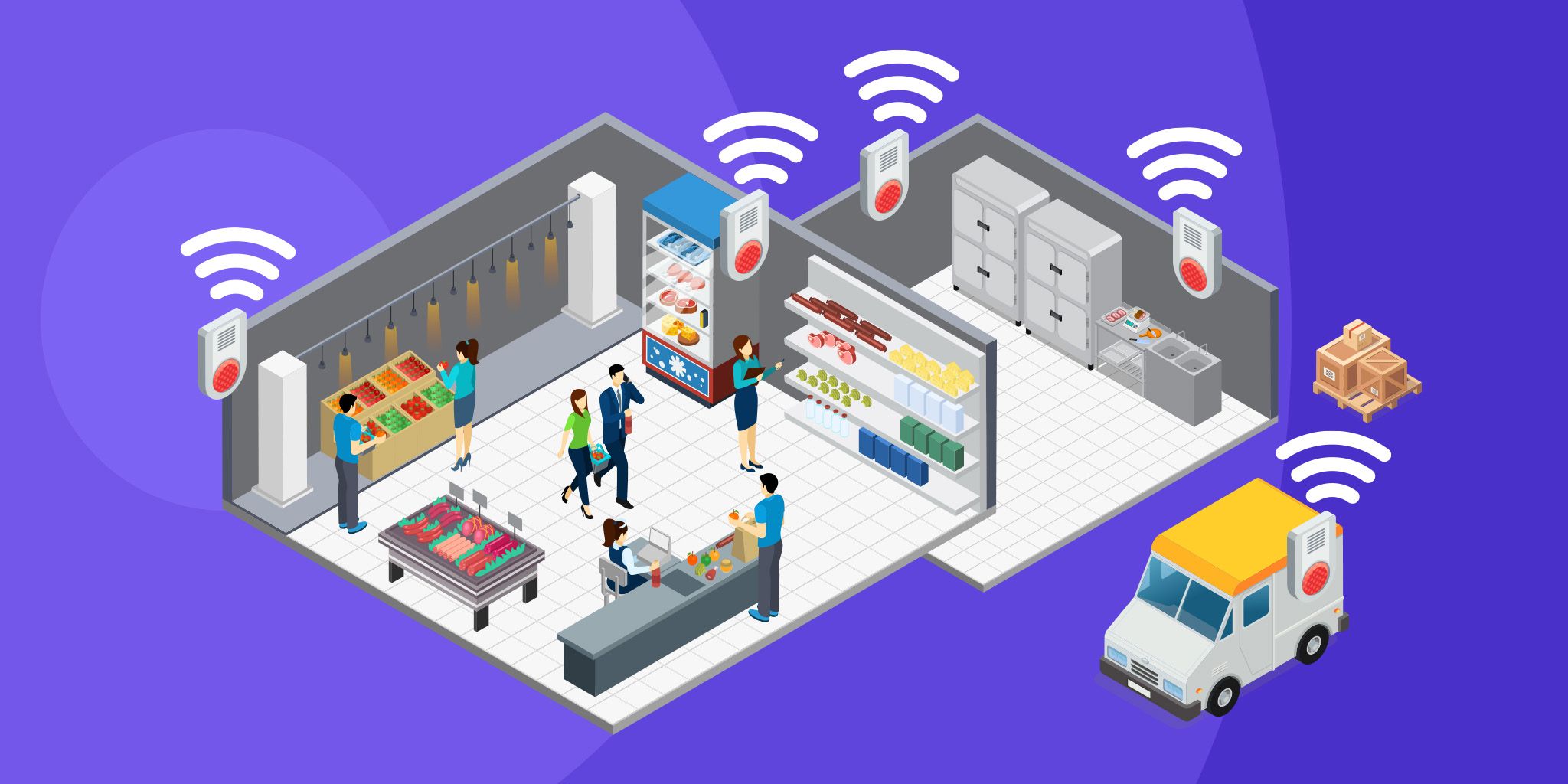
Sensing-as-a-Service for Grocery Stores
Environmental monitoring, compliance tracking, and real-time alerts to help grocers protect perishable goods and streamline labor.
Environmental monitoring, compliance tracking, and real-time alerts to help grocers protect perishable goods and streamline labor.
SmartSense by Digi
SmartSense by Digi

Primary and Failover Connectivity for Retail
4G/5G cellular networks for enabling uninterrupted retail operations with seamless support and rapid deployment across stores.
4G/5G cellular networks for enabling uninterrupted retail operations with seamless support and rapid deployment across stores.
KORE
KORE

Related Solutions
Retail
Food Safety Monitoring
Ensure food safety and eliminate manual processes with automated compliance and food condition tracking.
SmartSense by Digi
Retail
Sensing-as-a-Service for Grocery Stores
Environmental monitoring, compliance tracking, and real-time alerts to help grocers protect perishable goods and streamline labor.
SmartSense by Digi
Retail
Primary and Failover Connectivity for Retail
4G/5G cellular networks for enabling uninterrupted retail operations with seamless support and rapid deployment across stores.
KORE